



















































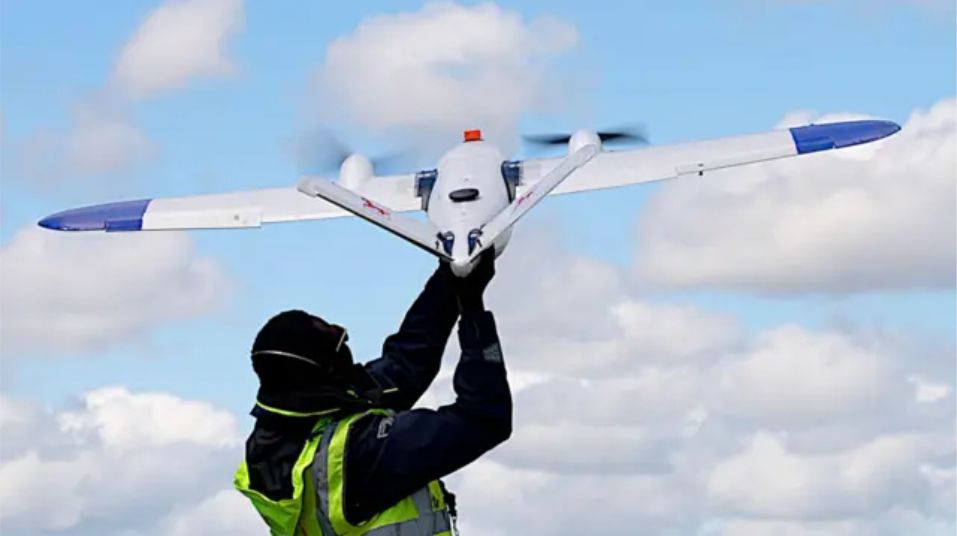
 Wildfires are becoming increasingly severe due to climate change and human activities. Traditional firefighting methods, including aerial and ground-based suppression, often struggle with rapid fire spread and inaccessible terrain. Researchers are now exploring drone swarms as a revolutionary solution to detect, monitor, and extinguish wildfires with greater efficiency.
The Concept of Drone Swarms in Firefighting
Drone swarms involve multiple UAVs (Unmanned Aerial Vehicles) working collaboratively using artificial intelligence (AI) and real-time communication networks. These drones can be equipped with:
- Thermal and Infrared Sensors: For early fire detection and hotspot monitoring.
- Fire Suppression Systems: Carrying and dispersing fire retardants or water.
- Autonomous Navigation: AI-driven coordination to optimize coverage and suppression strategies.
- Communication Relays: Enabling connectivity in remote locations.
Advantages of Drone Swarms in Wildfire Management
- Rapid Response: Drones can be deployed within minutes to assess fire spread and severity.
- Accessibility: Operates in hazardous and difficult terrains where human firefighters face risks.
- Scalability: Multiple drones can cover vast wildfire-affected areas simultaneously.
- Cost-Effective: Reduces reliance on expensive aerial firefighting assets such as helicopters and planes.
- 24/7 Operation: Drones equipped with night vision and AI can operate continuously without fatigue.
Challenges in Implementing Drone Swarms
- Battery Life and Payload Capacity: Limited energy sources affect operational time and suppression capabilities.
- AI Coordination and Communication: Ensuring seamless drone-to-drone and drone-to-ground connectivity.
- Regulatory and Airspace Restrictions: Addressing aviation laws and integrating with traditional firefighting operations.
- Fire-Proofing Technology: Enhancing drones’ resilience to extreme heat and smoke conditions.
Real-World Applications and Research
Recent studies and pilot programs demonstrate the feasibility of drone swarms in wildfire prevention and suppression:
- California Wildfire Management Programs: AI-driven UAVs used for fire monitoring and risk assessment.
- European Research Initiatives: Investigating swarm-based approaches for predictive fire control.
- Military and Defense Collaboration: Leveraging autonomous drone technology for disaster response applications.
Future Prospects
Advancements in battery technology, AI algorithms, and real-time data processing will further enhance the capabilities of drone swarms in firefighting. Integration with satellite-based monitoring, edge computing, and smart fire-resistant materials could make drone swarms a standard tool in global wildfire management. Drone swarms present a groundbreaking approach to wildfire suppression, offering speed, efficiency, and reduced human risk. As research progresses, overcoming technological and regulatory challenges will be crucial for widespread deployment.