















































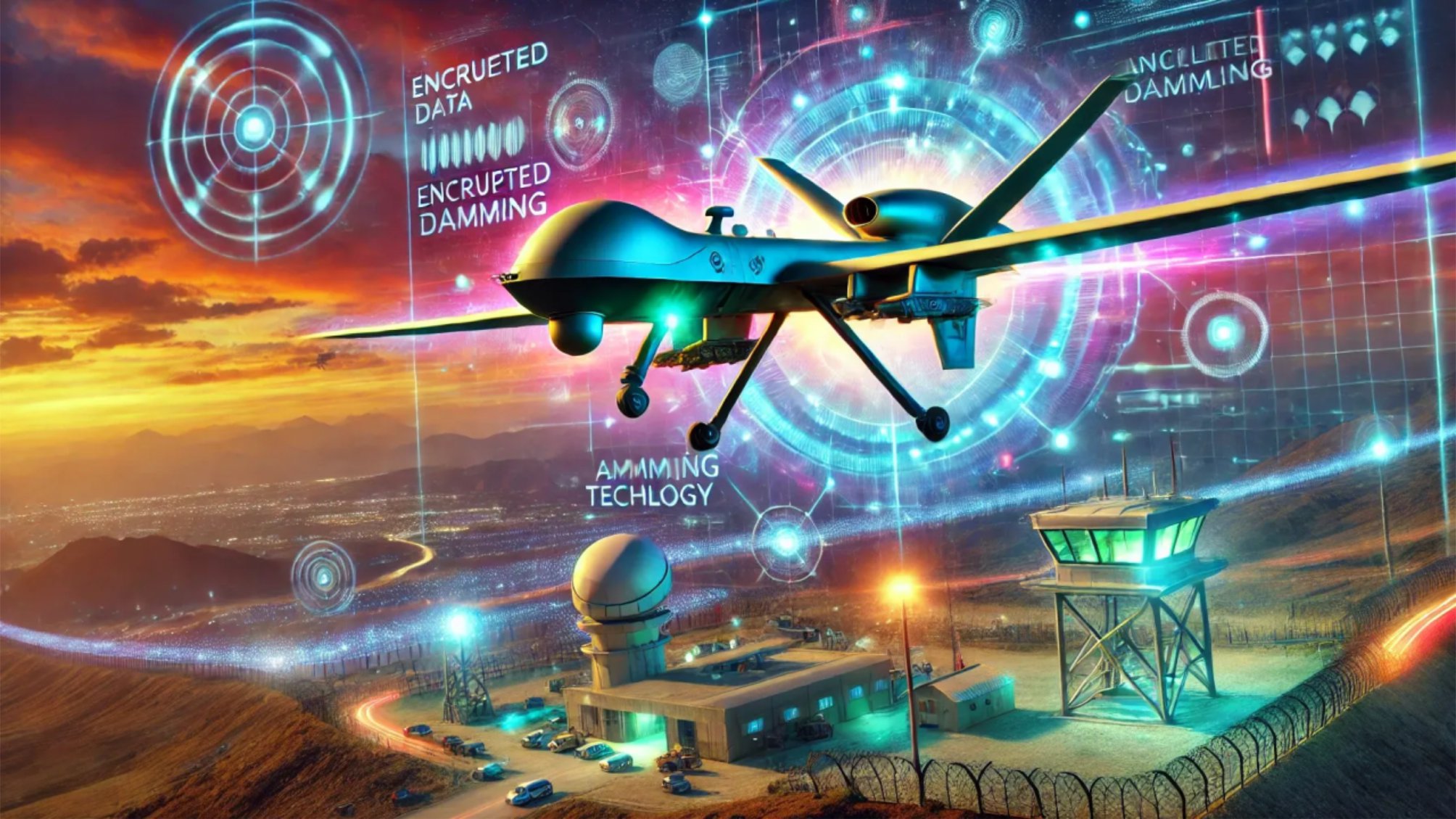
 The rapid proliferation of Unmanned Aerial Vehicles (UAVs), commonly known as drones, has revolutionized industries ranging from logistics and agriculture to surveillance and emergency response. However, as these aerial platforms become more integrated into the digital economy, they also become lucrative targets for cyber-adversaries. The security of a drone is only as strong as its weakest communication link. To ensure the safety of public airspace and the integrity of sensitive data, it is imperative to understand and mitigate the three primary threats to UAV operations: hijacking, spoofing, and signal jamming.
The Threat Landscape: Definitions and Dynamics
At the core of drone vulnerability lies the reliance on radio frequency (RF) signals and Global Navigation Satellite Systems (GNSS). Signal jamming is perhaps the most blunt-force method of disruption, where an attacker floods the drone’s operating frequency with “noise,” effectively drowning out the legitimate commands from the ground control station. This leads to a loss of control, often triggering an automated “return to home” function or, in worse cases, a catastrophic crash.
Spoofing is a more sophisticated and insidious form of attack. Instead of blocking the signal, the attacker transmits a counterfeit signal that mimics legitimate GPS or command data. By feeding the drone false coordinates, an adversary can trick the aircraft into believing it is miles away from its actual location, causing the onboard logic to “correct” its course into a restricted zone or into the hands of the attacker.
Hijacking, or command-and-control (C2) interception, represents the ultimate breach of security. In this scenario, the attacker gains full unauthorized access to the drone’s communication link. By exploiting unencrypted protocols or weak authentication, the hijacker can override the original pilot’s commands, steal captured data in real-time, or repurpose the drone for malicious intent.
Hardening the Command Link via Encryption
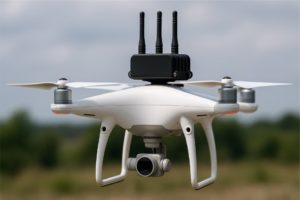 The first line of defense against hijacking is the implementation of robust, end-to-end encryption. Many consumer-grade drones historically utilized “cleartext” communication, making it trivial for any individual with a high-gain antenna and basic software-defined radio (SDR) tools to eavesdrop or inject commands. Modern security standards now dictate the use of Advanced Encryption Standard (AES-256) for all data packets transmitted between the controller and the UAV.
Beyond simple encryption, Frequency Hopping Spread Spectrum (FHSS) technology provides a moving target for attackers. Instead of staying on a single, predictable frequency, the drone and its controller rapidly switch between dozens of frequencies in a pseudo-random sequence. This makes it incredibly difficult for a jammer to concentrate enough power on the correct frequency at the right time, and even more difficult for a hijacker to maintain a stable connection to the hijacked craft.
Combatting Spoofing with Multi-Sensor Fusion
To prevent spoofing, drone manufacturers are moving away from a total reliance on GPS. While GPS is convenient, its signals are relatively weak by the time they reach Earth, making them easy to overpower. The solution lies in Multi-Sensor Fusion, a process where the drone cross-references satellite data with other internal and external inputs.
By utilizing Inertial Measurement Units (IMUs)—which include accelerometers and gyroscopes—the drone can detect if its physical movement matches the movement reported by the GPS. If the GPS suddenly claims the drone is moving at 200 knots while the IMU registers a hover, the onboard computer can flag the GPS data as compromised and switch to “dead reckoning” to return safely. Additionally, Visual Positioning Systems (VPS) and LiDAR allow drones to navigate based on the physical terrain below them, providing a localized map that a remote spoofing device cannot easily manipulate.
Resisting Jamming through AI and Directional Antennas
As jamming technology becomes more portable, drones must become more “intelligent” at the edge. Advanced UAVs are now being equipped with Artificial Intelligence (AI) interference detection algorithms. These systems can distinguish between natural background noise, unintentional interference from Wi-Fi routers, and intentional malicious jamming. Once jamming is detected, the drone can automatically execute defensive maneuvers, such as gaining altitude to re-establish a line-of-sight connection or immediately navigating to a pre-programmed emergency landing zone using non-RF sensors.
On the ground side, the use of Directional and Beamforming Antennas significantly mitigates the impact of localized jamming. Unlike omnidirectional antennas that broadcast in all directions, beamforming focuses the signal energy directly toward the drone. This increases the signal-to-noise ratio, making it much harder for an attacker’s jammer to “drown out” the pilot’s commands.
The Future of UAV Cybersecurity
The battle for the skies is an ongoing arms race. As defensive measures improve, so too do the tools used by hackers and electronic warfare specialists. Preventing drone hijacking and signal interference is not a one-time fix but a continuous process of updates and vigilance. Future security frameworks will likely involve Blockchain-based authentication to ensure that every command sent to a drone is verified by an immutable digital signature, and Quantum-resistant encryption to protect against the next generation of computing threats.
Ultimately, the safety of drone integration into our daily lives—from delivering life-saving medical supplies to inspecting critical infrastructure depends on a “security-by-design” philosophy. By layering encryption, sensor redundancy, and intelligent interference rejection, we can build an aerial ecosystem that is resilient against the evolving threats of the digital age.