























































 Digital technologies are transforming higher education, giving institutions a competitive edge and shaping the future of learning. Among the emerging innovations, digital twins—virtual replicas of a physical system—stand out, reshaping campus security, operations, and educational experiences. By integrating digital twins with smart cameras and modern classroom technologies, universities are crafting smarter, safer, and more efficient campuses.
Sometimes change is a gradual process. At other times, however, a technological innovation can have a profound impact in a short space of time. One of these transformative technologies, which is starting to be introduced into the education sector, is digital twins.A digital twin is, essentially, a detailed model of a campus—including its buildings, classrooms, and infrastructure—created on a computer. Although the full potential of this new technology has yet to be fully realized, digital twins already offer a range of applications that can revolutionize educational environments and outcomes.
They are particularly useful in the education sector because schools and universities typically generate significant amounts of operational data—such as student course enrollments, classroom bookings and more. In principle, this can provide valuable insights for administrators, educators, and learners. Without digital twin technology, however, these institutions face substantial hurdles to achieve this.
 Traditional campus management methods, after all, rely on outdated cameras and separate systems. As result, they are often inadequate and costly, particularly for growing universities with dozens of classrooms. In addition, access control systems that depend on isolated card readers tend to complicate security processes. Conventional classrooms with basic whiteboards and low-resolution projectors, meanwhile, fail to engage students and burden educators.
These inefficient and disconnected systems no longer meet the demands of a modern, large-scale campus. It is here that digital twin technology can make such a significant difference.
The benefits of applying digital twins to educational institutions
Digital twins bridge the physical and digital environments in order to improve instructional services, settings, and procedures. Here are several key benefits:
Digital twins enhance learning environments
Digital twins enable real-time monitoring and analysis of physical spaces. Administrators can optimize classroom layouts, equipment, and workflows to provide a seamless learning experience from the moment students enter the campus to when they leave. Students benefit from smarter, tech-enabled environments, fostering engagement and efficiency.
- Digital twins streamline operations
 Digital twins can integrate various management systems, improving data accuracy and operational visibility, which in turn enhances educational service delivery. This integration provides a holistic view of campus operations, allowing administrators to monitor and manage multiple aspects of the campus—such as security, maintenance, and resource allocation—from a centralized platform. By streamlining these processes, digital twins reduce operational inefficiencies and lower costs.
- Digital twins promote sustainability
Digital twins support environmental responsibility by monitoring resource usage, such as energy and water. Universities can use insights to reduce their ecological footprint to, for instance, identify inefficiencies in lighting or HVAC systems and reallocating physical resources to avoid waste.
In practice: digital twins at Qassim University
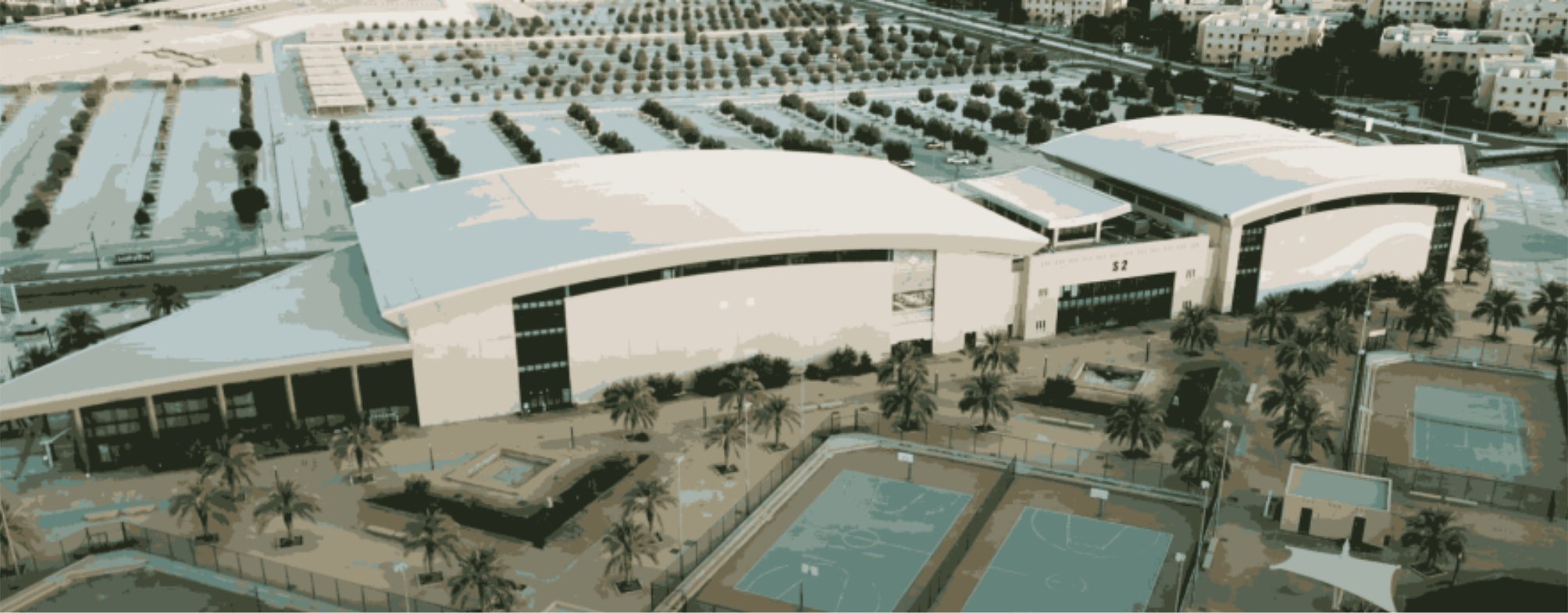
 Qassim University in Saudi Arabia is a prime example of how digital twin technology can transform a campus. Partnering with Hikvision, the university developed an augmented reality (AR) digital twin ecosystem covering all 30 buildings.
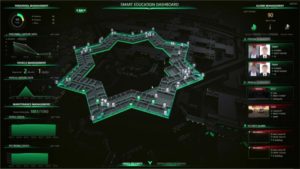
This ecosystem features a detailed 3D model with over 6,000 smart cameras, all managed through the HikCentral Professional platform. With an intuitive, centralized dashboard, administrators can easily monitor indoor layouts and structures, enabling a safer environment for everyone on campus.
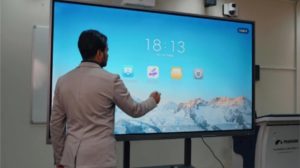
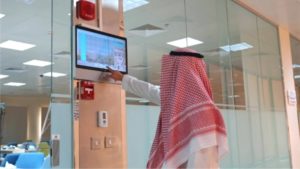
In smart classrooms, 86-inch 4K Interactive Displays elevate digital content display and teaching, while 22-inch Electronic Class Boards provide real-time updates on schedules, notices, and attendance. Facial recognition streamlines student check-ins and improves attendance management.
An advanced access control system was implemented for vehicles, students, staff, and visitors, enhancing campus security and operational efficiency. The system uses Face Access Terminals to verify identities in just 0.2 seconds, ensuring safety without delays.
The impact of digital transformation
This ongoing digital transformation addresses Qassim University’s current challenges and positions it at the forefront of educational technology.It also underlines the broad benefits of digital twin ecosystems, being, as it is, an excellent example of how a well-implemented digital twin ecosystem can not only streamline operations but also position a university as a leading data-driven institution.
Educators have benefited from improved scheduling and attendance management systems, allowing them to focus more on student interaction and teaching quality, providing education across boundaries. Tech-advanced classrooms promote active learning and provide students with a more streamlined campus experience. For administrators, centralized platforms simplify complex operations, improving efficiency across key areas such as dining, dormitories, and campus communications.
Looking ahead, Qassim University plans to scale its smart classrooms and access control systems, continuing its journey toward a fully future-ready campus.
The digital twin ecosystem offers universities a roadmap to smarter operations and superior educational outcomes. From reducing operational costs to enriching learning experiences, the possibilities are immense. If you are interested in learning more about the collaboration between Qassim University and Hikvision.
For more information, please visit us at www.hikvisionindia.com