



















































Thousands Feared Trapped, Emergency Response Intensifies Amid Ongoing Aftershocks and Infrastructural Collapse
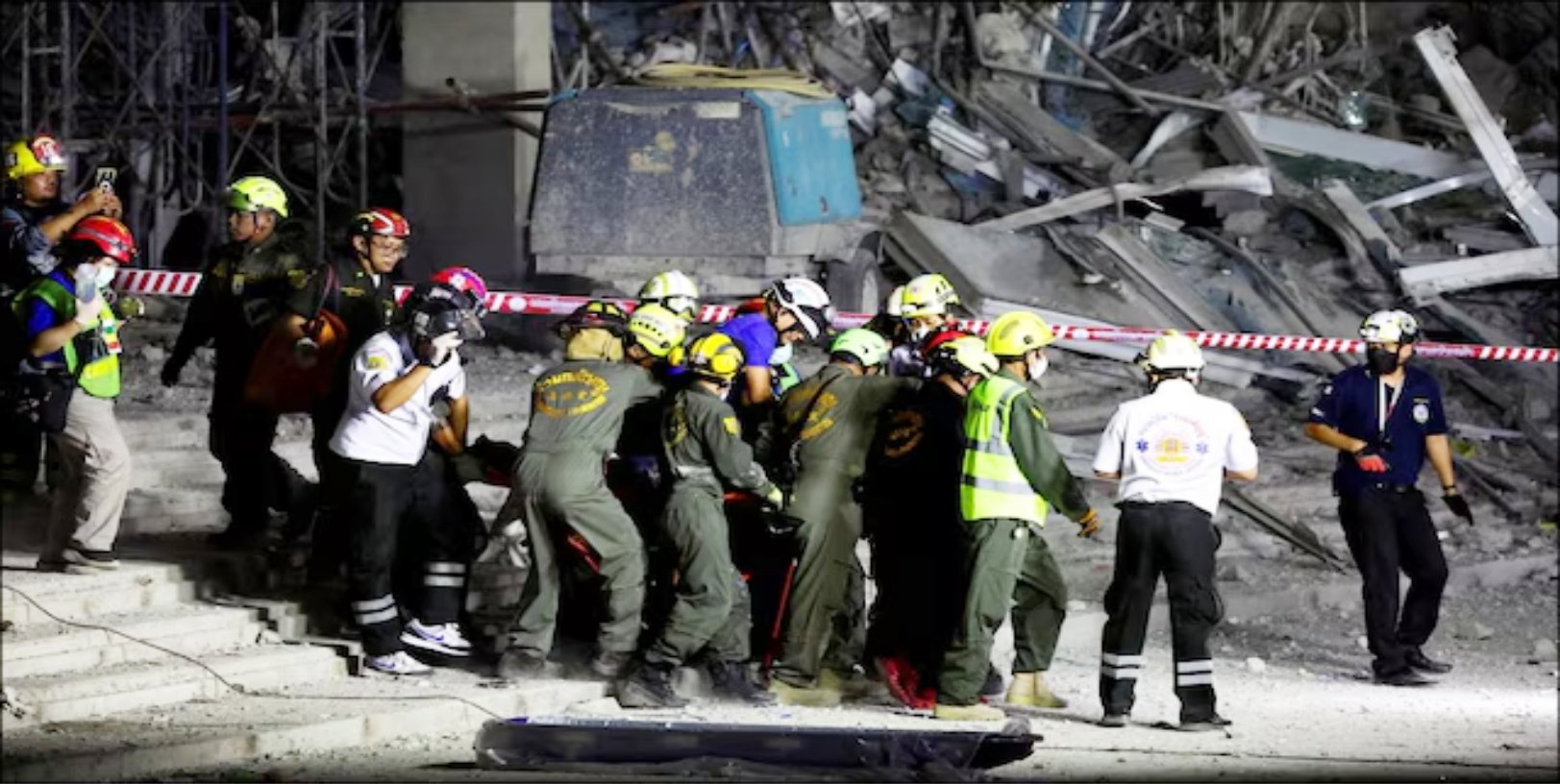
April 2025, Southeast Asia – Regional Disaster Bulletin,
Following the catastrophic 7.7-magnitude earthquake that shook central Myanmar and sent tremors as far as Bangkok, Thailand, on March 28, 2025, a full-scale, multi-agency rescue and relief operation is currently underway. The earthquake, one of the most powerful in recent Southeast Asian history, has left a devastating trail of destruction-collapsing buildings, severing transportation links, and sparking fires, while causing mass displacement across rural and urban centers alike.
As the official death toll continues to rise—with over 3,500 fatalities reported in Myanmar and dozens in Thailand, and thousands more injured or missing—rescue operations are being conducted in extremely precarious conditions, testing the resilience of first responders, infrastructure, and governance systems across both nations.
Myanmar: Epicenter of the Crisis
The brunt of the seismic event was borne by Myanmar’s Sagaing and Mandalay regions, where centuries-old structures, residential blocks, schools, and markets were reduced to rubble. Power outages, collapsed bridges, and landslides have cut off access to more than 80 remote villages. Entire communities remain unreachable as communication lines are down and fuel shortages hinder mobility.
Rescue Operations:
- Military-led Search and Rescue (SAR) units have been deployed en masse. Coordinated efforts between the Myanmar Fire Services Department, Red Cross, and local volunteer brigades are being executed with precision despite limited equipment and challenging terrain.
- Sniffer dogs, drones, and geo-sensors are being utilized to identify survivors trapped beneath the rubble of collapsed homes and municipal buildings.
- Emergency trauma care is being provided through field hospitals and mobile medical units, some of which are being supported by Doctors Without Borders and the International Red Cross. Injuries from falling debris, burns, and trauma-induced shock dominate treatment priorities.
Challenges Faced:
Persistent aftershocks have forced rescuers to halt operations multiple times due to structural instability.
- Torrential unseasonal rains are causing flooding in already-damaged areas, washing away debris and threatening to drown buried victims.
- A rising public health concern looms as clean water becomes scarce, raising the risk of communicable diseases.
Thailand: Bangkok Feels the Shock
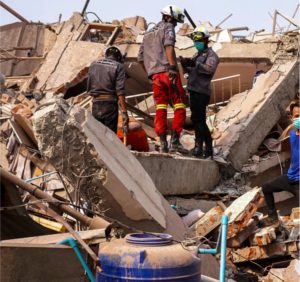 In Bangkok, the earthquake caused the collapse of an under-construction commercial high-rise in the Sukhumvit area, sending debris crashing onto adjacent buildings and roadways. The incident has triggered a swift response by Thailand’s Urban Search and Rescue (USAR) teams, coordinated under the Disaster Prevention and Mitigation Department (DPMD).
Emergency Response:
- Specialized teams used concrete cutters, thermal cameras, and automated debris lifting systems to recover both survivors and bodies.
- Emergency medevac services airlifted critically injured persons to trauma centers, while temporary shelters were activated in the outskirts of Bangkok to host those displaced.
- Bangkok Metropolitan Administration (BMA) declared a “Critical Impact Zone” within 5 km of the building collapse site to control traffic, enable rescue logistics, and prevent looting or further civilian injuries.
- Structural engineers are currently inspecting nearby skyscrapers for quake-induced integrity loss, raising concerns about seismic resilience in Bangkok’s rapid urban sprawl.
Regional and Global Support:
Given the regional scale of the disaster, global humanitarian agencies and ASEAN nations are offering rapid assistance:
- The United Nations Office for the Coordination of Humanitarian Affairs (UNOCHA) has dispatched emergency response teams and satellite communication devices to Myanmar.
- India, Japan, and Singapore have sent airlifts of medical supplies, water purification units, food rations, and SAR gear.
- Seismic relief coordination cells have been activated in New Delhi and Bangkok to streamline cross-border support, resource pooling, and damage assessments.
Infrastructure Collapse and Economic Impact
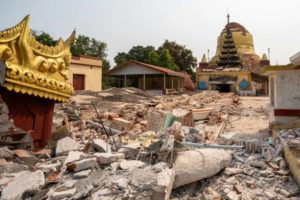 Preliminary assessments suggest the quake may have caused upwards of $3 billion USD in damages, with Myanmar’s already fragile infrastructure system bearing the brunt. Industrial facilities, telecom towers, and energy distribution systems have been critically impaired. In Thailand, real estate developers and insurance firms are facing steep losses, while transport disruptions are impacting regional supply chains.
Rehabilitation and Rebuilding: The Road Ahead
As immediate rescue gives way to relief and rehabilitation, governments and international partners are now focusing on:
- Temporary shelters and food security, especially in rural Myanmar.
- Restoration of transport and energy infrastructure.
- Psychosocial support and community resilience training.
- Urban and rural reconstruction with seismic-resistant design frameworks.
The quake has also reignited conversations around disaster preparedness, urban zoning laws, and early-warning systems—particularly as cities like Bangkok face heightened exposure to seismic risk due to dense construction and insufficient geological studies.
Conclusion: Humanity Amid the Rubble
As stories emerge of first responders pulling children alive from the debris, families reunited, and neighbors risking their lives to help one another, a spirit of resilience is visible amid the tragedy. Despite the overwhelming scale of the crisis, collective efforts from governments, citizens, and international allies are helping bring hope—and life—back to the shaken heart of Southeast Asia.