

















































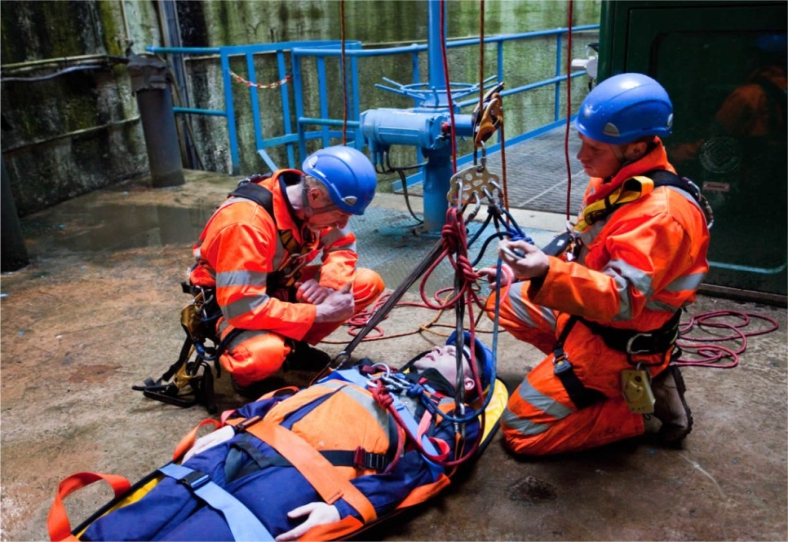
 The increasing frequency, intensity, and complexity of disasters across the world are transforming the way governments, industries, emergency agencies, and humanitarian organizations approach rescue operations and disaster prevention strategies. Natural disasters such as floods, earthquakes, cyclones, wildfires, heatwaves, and landslides are becoming more severe due to climate change and environmental degradation, while rapid urbanization, industrial expansion, technological dependence, and infrastructure complexity are creating new categories of man-made and technological emergencies. Traditional disaster management frameworks, although still essential, are no longer sufficient to address the operational challenges posed by modern disaster environments. As a result, emergency management systems worldwide are increasingly adopting emergent disaster rescue methods and advanced prevention management strategies that integrate technology, predictive intelligence, automation, data analytics, interdisciplinary coordination, and community resilience into disaster response ecosystems.
Emergent disaster rescue methods refer to innovative, adaptive, and technology-driven approaches designed to improve emergency response efficiency, reduce responder risks, accelerate victim rescue, and strengthen operational coordination during disasters. Prevention management, on the other hand, focuses on proactive measures aimed at minimizing disaster risks, reducing vulnerabilities, enhancing preparedness, and strengthening resilience before emergencies occur. Together, these two domains form the foundation of modern disaster resilience strategies capable of protecting human life, infrastructure, economic stability, and environmental systems in an increasingly unpredictable global risk environment.
 One of the most transformative developments in emergent disaster rescue methods is the integration of Artificial Intelligence and predictive analytics into emergency management systems. AI-powered platforms are now capable of analyzing vast amounts of historical disaster data, weather patterns, infrastructure conditions, population density information, and operational response records to identify emerging threats and predict disaster escalation scenarios. Predictive analytics enables authorities to anticipate floods, wildfire spread, storm surges, landslide risks, industrial failures, and evacuation challenges before disasters reach critical stages.
This proactive intelligence allows emergency agencies to mobilize resources early, issue timely evacuation orders, optimize rescue planning, and reduce operational uncertainty during crisis situations.
For example, AI-based flood prediction systems can analyze rainfall intensity, river levels, drainage capacities, satellite imagery, and terrain mapping to forecast urban flooding with remarkable accuracy. Disaster management agencies can use such intelligence to deploy rescue boats, pre-position medical supplies, establish evacuation shelters, and issue early warning alerts to vulnerable populations. Similarly, predictive wildfire systems utilizing weather analytics, vegetation mapping, wind modeling, and thermal imaging can help authorities identify high-risk zones and deploy firefighting resources strategically before fires spread uncontrollably.
 Drone technology has emerged as one of the most impactful innovations in disaster rescue operations. Unmanned aerial vehicles are increasingly used for disaster surveillance, search and rescue missions, damage assessment, thermal imaging, communication support, and real-time situational awareness. During floods, earthquakes, building collapses, industrial fires, and landslides, drones provide rapid aerial intelligence that significantly improves operational coordination. Thermal imaging drones can identify trapped victims beneath debris or in low-visibility environments such as smoke-filled structures and floodwaters. In inaccessible or dangerous areas, drones eliminate the need for immediate human exposure while providing rescuers with critical operational data.
In wildfire management, drones equipped with infrared sensors monitor fire spread patterns, identify hotspots, and assist in directing firefighting resources effectively. During industrial accidents involving hazardous chemical releases, drones can enter toxic environments to measure gas concentrations, assess infrastructure damage, and provide visual intelligence without risking responder exposure. Some advanced drone systems are now capable of delivering medical supplies, flotation devices, emergency communication equipment, and life-support materials directly to isolated victims during disasters.
Robotics and autonomous rescue systems are also redefining emergency response capabilities. Robotic rescue units are increasingly deployed in environments too dangerous for human responders, including collapsed buildings, tunnel fires, chemical leaks, radiation zones, and confined spaces. Ground-based rescue robots equipped with cameras, sensors, robotic arms, and thermal imaging systems can navigate unstable environments to search for victims, assess hazards, and support rescue planning. In nuclear or hazardous material incidents, autonomous robots can perform containment operations, environmental monitoring, and reconnaissance tasks without exposing responders to lethal conditions.
Underwater robotics is becoming equally important in flood rescue operations, dam inspections, marine disasters, and submerged infrastructure emergencies. Autonomous underwater vehicles equipped with sonar systems and high-definition imaging technologies support victim location, structural inspection, and debris assessment in hazardous aquatic environments. These technologies significantly improve rescue precision while reducing operational risks associated with diver deployment.
The emergence of smart communication systems and integrated command platforms is another major advancement in modern disaster rescue management. During large-scale disasters, communication failures often contribute to operational confusion, delayed response, and poor coordination between agencies. Modern emergency management systems now utilize cloud-based command centers, satellite communication networks, real-time data-sharing platforms, GIS-enabled operational dashboards, and AI-assisted decision-support systems to maintain continuous coordination during emergencies.
Integrated communication systems allow fire services, police departments, disaster response forces, healthcare providers, military support units, municipal authorities, and humanitarian organizations to share operational intelligence instantly. Real-time communication improves resource allocation, evacuation management, responder deployment, casualty tracking, and situational awareness. Geographic Information Systems (GIS) further enhance coordination by providing digital mapping of hazard zones, evacuation routes, shelters, infrastructure vulnerabilities, and operational resource locations.
The Incident Command System (ICS) has also evolved significantly within emergent rescue methodologies. ICS provides a structured framework for multi-agency coordination during emergencies, ensuring clear command hierarchies, communication channels, operational responsibilities, and resource management systems. Modern ICS frameworks increasingly integrate digital technologies, predictive analytics, drone intelligence, and AI-supported operational planning to improve command efficiency during complex incidents.
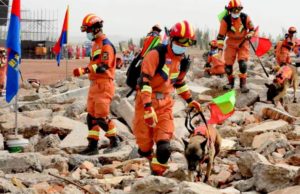 Urban Search and Rescue (USAR) methodologies are also advancing rapidly due to emerging technologies and operational innovations. High-rise buildings, underground transportation systems, industrial infrastructure, tunnels, and dense urban settlements present unique rescue challenges during earthquakes, explosions, fires, and structural collapses. Modern USAR teams increasingly utilize life-detection devices, thermal imaging systems, concrete-cutting robotics, structural monitoring sensors, drone reconnaissance, and digital mapping systems to improve victim rescue efficiency. Structural engineers, firefighters, medical specialists, canine units, and technical rescue experts now operate within highly integrated rescue frameworks supported by advanced technology and real-time intelligence systems.
Medical rescue and disaster healthcare management are experiencing similar transformation. Mobile field hospitals, telemedicine systems, AI-assisted triage platforms, portable diagnostic devices, wearable biometric monitoring systems, and drone-assisted medical delivery networks are improving casualty management during emergencies. During mass casualty incidents, AI-enabled triage systems can prioritize patients based on injury severity and survival probabilities, allowing medical teams to allocate resources more effectively. Remote medical consultation platforms enable specialists to guide field responders in isolated disaster zones where advanced healthcare infrastructure may be unavailable.
Climate change has significantly accelerated the development of emergent prevention management strategies. Rising temperatures, extreme rainfall, sea-level rise, prolonged droughts, and unpredictable weather patterns are increasing disaster risks worldwide. Prevention management now emphasizes climate resilience, sustainable infrastructure development, environmental protection, and adaptive urban planning. Governments and urban planners increasingly recognize that disaster prevention must be integrated into infrastructure design, land-use planning, transportation systems, industrial development, and environmental governance.
Flood prevention management now includes smart drainage systems, rainwater harvesting infrastructure, floodplain zoning, wetland restoration, permeable urban surfaces, and AI-driven flood forecasting systems. Wildfire prevention strategies involve controlled vegetation management, satellite-based monitoring, firebreak construction, early warning systems, and community evacuation planning. Coastal regions increasingly utilize sea walls, mangrove restoration, storm surge barriers, and resilient construction standards to reduce cyclone and tsunami vulnerabilities.
Industrial disaster prevention management is becoming more sophisticated through the adoption of Industry 4.0 technologies and predictive safety systems. Smart factories now utilize IoT-enabled sensors, predictive maintenance systems, AI-driven hazard detection, automated shutdown mechanisms, and digital twin simulations to identify operational risks before accidents occur. Real-time monitoring of pressure systems, gas concentrations, electrical loads, machinery vibration, and thermal conditions allows industries to detect anomalies and prevent catastrophic failures proactively.
Cybersecurity is emerging as a critical component of modern disaster prevention management. As emergency systems, critical infrastructure, power grids, transportation networks, healthcare systems, and industrial operations become increasingly interconnected through digital platforms, cyber threats can potentially trigger or amplify disasters. Ransomware attacks, infrastructure hacking, communication disruptions, and digital sabotage can severely compromise emergency response capabilities and public safety systems.
Disaster prevention management therefore now includes cybersecurity resilience, secure communication architecture, threat monitoring systems, and digital infrastructure protection strategies.
Community resilience has also become a central pillar of modern prevention management. Governments and disaster agencies increasingly recognize that communities themselves play a vital role in reducing disaster impacts. Public awareness programs, first aid training, fire safety education, evacuation drills, emergency communication systems, and citizen volunteer networks significantly improve disaster preparedness and local response capacity. Community-based disaster management programs empower local populations to identify risks, develop response plans, and support vulnerable populations during emergencies.
The role of big data and knowledge management in prevention management is expanding rapidly. National disaster databases, incident analytics systems, hazard mapping platforms, and operational intelligence repositories allow authorities to study disaster trends, evaluate vulnerabilities, and improve policy development. Lessons learned from previous disasters are increasingly integrated into emergency planning, infrastructure design, building regulations, industrial compliance frameworks, and public safety policies. India represents a highly important operational environment for emergent rescue methods and prevention management strategies. The country faces multiple hazards including floods, cyclones, earthquakes, industrial accidents, urban fires, landslides, and extreme heatwaves. Rapid urbanization, population density, industrial expansion, and infrastructure growth are increasing operational risks across cities and industrial corridors. Organizations such as the National Disaster Management Authority and the National Disaster Response Force are increasingly integrating technology-driven disaster management systems, advanced rescue methodologies, drone operations, GIS platforms, and predictive analytics into emergency preparedness frameworks.
Smart city initiatives across India are also contributing to disaster resilience through integrated surveillance systems, emergency communication networks, intelligent traffic management, sensor-enabled infrastructure, and digital emergency command centers. However, significant challenges remain regarding infrastructure modernization, funding limitations, inter-agency coordination, public awareness, and technology accessibility across rural and semi-urban regions.
Despite technological advancements, emergent disaster rescue methods still face operational and ethical challenges. Dependence on digital systems creates cybersecurity vulnerabilities and communication risks during infrastructure failures. Autonomous rescue systems may struggle in highly unpredictable environments. AI decision-making models require reliable datasets and operational validation. High implementation costs can limit accessibility for underfunded emergency agencies. Additionally, human judgment, leadership, empathy, ethical reasoning, and adaptability remain irreplaceable during complex rescue operations involving emotional trauma, unpredictable hazards, and life-critical decisions.
The future of disaster management will likely depend on hybrid operational ecosystems where human expertise and technological intelligence function together. Emergency responders will increasingly utilize AI-supported analytics, autonomous systems, drone intelligence, smart communication platforms, and predictive risk management tools to enhance operational efficiency while retaining human-centered decision-making and leadership capabilities.
Ultimately, emergent disaster rescue methods and prevention management represent a strategic evolution in global emergency resilience. Modern disasters are becoming more interconnected, technologically complex, and operationally demanding.