


















































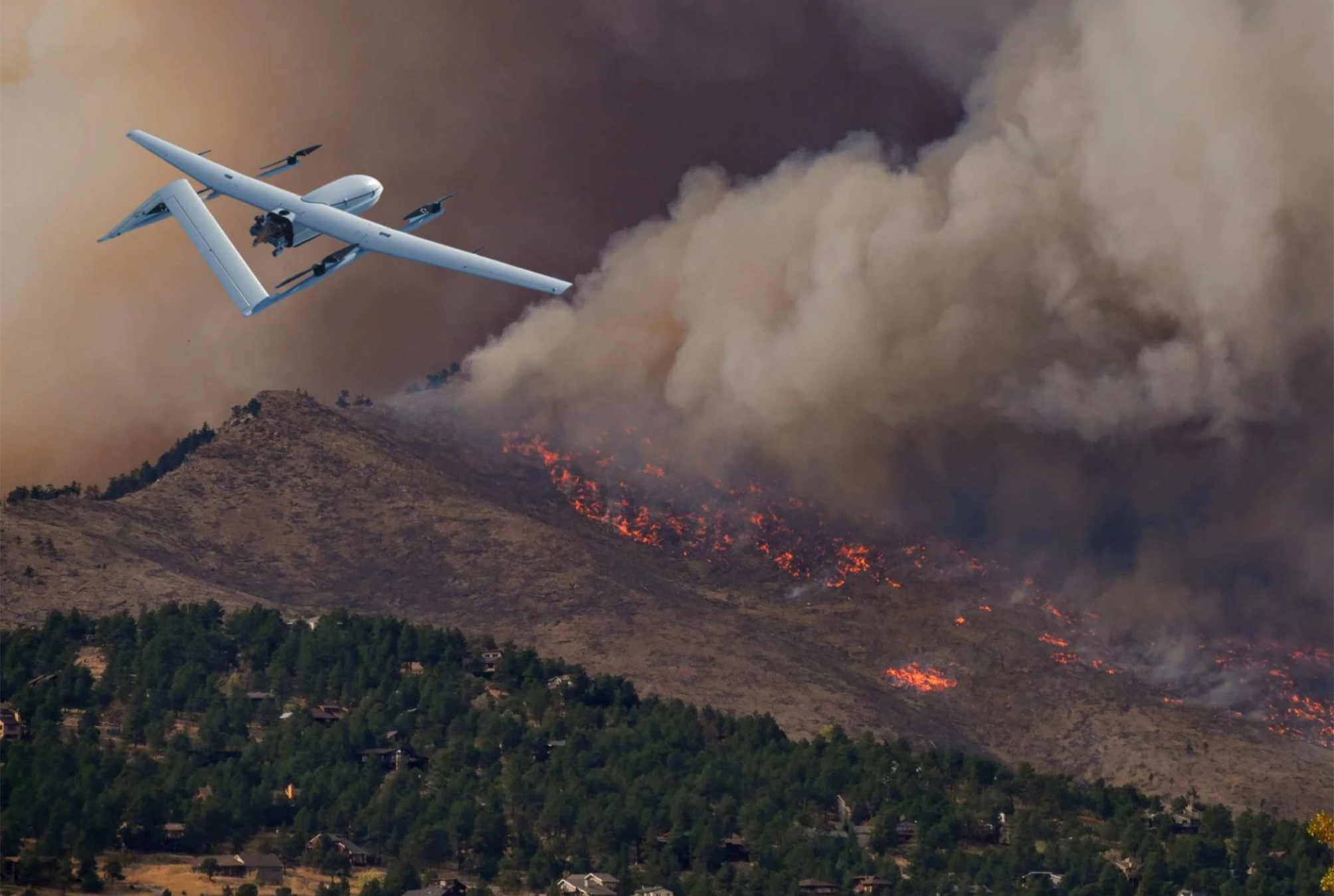
 In the ever-evolving landscape of emergency response, drones have emerged as invaluable tools, significantly impacting firefighting strategies. The utilization of drones in firefighting operations has proven to be a game-changer, providing crucial advantages in terms of situational awareness, efficiency, and overall safety. This article delves into the various ways drones are employed in firefighting and their transformative impact on emergency response.
- Aerial Surveillance and Situational Awareness: Drones equipped with high-resolution cameras and thermal imaging technology play a pivotal role in providing real-time aerial surveillance. This enables firefighters to swiftly assess the scale and scope of a fire, identify hotspots, and monitor the progression of flames. The enhanced situational awareness derived from drone footage aids in strategic decision-making and resource allocation.
- Rapid Deployment in Emergency Scenarios: Unlike traditional methods of obtaining aerial views through helicopters or planes, drones offer unparalleled agility and speed. They can be rapidly deployed to survey large areas in a short span, allowing firefighters to quickly gather critical information about the fire’s behavior, potential risks, and optimal points for intervention.
- Monitoring Fire Dynamics and Behavior: Drones equipped with advanced sensors contribute to monitoring the dynamics and behavior of a fire. By collecting data on factors such as wind direction, temperature, and fire intensity, these drones assist firefighting teams in predicting the fire’s path. This information proves instrumental in devising effective containment and extinguishing strategies.
- Communication and Coordination: Drones serve as communication hubs in challenging environments. They facilitate communication between ground teams and incident commanders by relaying real-time visuals and data. This seamless communication enhances coordination efforts, ensuring that firefighting teams are well-informed and can adapt their tactics based on the evolving situation.
- Safety Assessment and Search-and-Rescue: Drones equipped with thermal imaging cameras assist in locating individuals within affected areas. In scenarios where visibility is compromised, these drones aid in search-and-rescue operations by identifying heat signatures and potential victims. This capability enhances the safety of both firefighters and civilians.
- Fire Mapping and Documentation: Drones contribute to the creation of detailed fire maps, documenting the extent of the affected area. This information aids post-incident analysis, allowing authorities to understand the fire’s behavior, assess the effectiveness of response strategies, and implement improvements for future incidents.
- Environmental Monitoring: Beyond firefighting applications, drones are instrumental in environmental monitoring post-fire. They help assess ecological damage, identify areas prone to secondary incidents like landslides, and contribute to the development of rehabilitation plans for affected ecosystems.
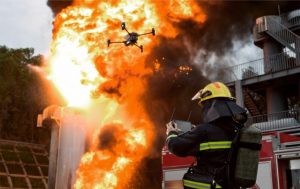 Incorporating drones into firefighting operations represents a paradigm shift in emergency response capabilities. The ability to gather real-time data, improve situational awareness, and enhance overall operational efficiency positions drones as indispensable tools in the modern firefighting arsenal. As technology continues to advance, the integration of drones is expected to evolve, further augmenting the capabilities of firefighting teams and ultimately saving lives.