





















































 An ideal manufacturing workshop features continuous monitoring of all machines and processes, offering a comprehensive view of the production line. This visualization transforms complex data into easy-to-understand visuals, enabling quicker decision-making and proactive issue resolution. With full visibility, businesses can gain deeper insights into their operations, streamline processes, and enhance overall productivity.
Here are three ways production line visualization can significantly enhance production efficiency:
- Efficient remote AR inspection
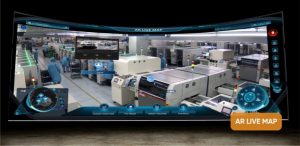
Using video and AR technology, inspections are faster by streamlining equipment and production evaluations and eliminating time-consuming manual paper forms. An AR map simultaneously provides a comprehensive view of the entire workshop and specific details through picture-in-picture mode. Clicking on a specific point within the live feed reveals detailed information, enabling a more intuitive view and immediate issue responses, thus preventing disruptions.
Moreover, the entire process is managed online, from scheduling to regular video inspections, with tasks promptly assigned to maintenance personnel. This ensures a proactive and seamless approach to monitoring, alarm handling, maintenance, and quality assurance.
- Clear video tracing for production ramp-up analysis
 Operators often struggle with equipment malfunctions in production lines, necessitating video playback for diagnostics. This process can be time-consuming due to unclear images or difficulties locating the video feed. Moreover, in fast-paced industries like electronics, setting up a new production line involves a capacity ramp-up. For instance, output scaling from 100 to 10,000 units requires careful analysis to identify optimization opportunities and improve line capacity. This also necessitates quick and clear video tracing.
Specialized production line cameras are invaluable in these scenarios. Unlike traditional models, their compact, industrial design and variable zoom make them perfect for different assembly lines, even in tight spaces. These cameras capture fast-moving processes at high frame rates and offer slow-motion playback for detailed analysis. When integrated with third-party systems like PLCs or barcode scanners, they quickly locate video feeds, aiding in rapid issue identification, equipment diagnostics, and production improvements.
- Real-time video viewing with rapid response
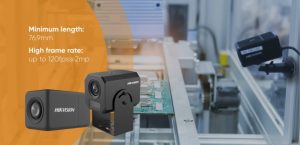 In production lines, having real-time visibility of various parts is crucial. Imagine working in one area and needing to see what’s happening in another instantly. Relaying messages between people can waste time and lead to mistakes. HDMI cameras connected directly to screens offer real-time high-definition, low-latency live feeds, allowing workers to assess conditions quickly and accurately.
Enhanced by AR, these live feeds display vital data such as production metrics, safety updates, and equipment statuses. This integration empowers operators to oversee operations efficiently. For instance, when a production line halts unexpectedly, operators traditionally call personnel for investigation. With instant alerts directly on the AR screen, they can swiftly pinpoint and resolve issues onsite.
Discover Hikvision’s production line visualization solution
Hikvision combines AR technology, specialized cameras, and centralized management software to strengthen the connection between production line operations and management. This approach enhances situational awareness and efficiency, creating a safer and more productive work environment.
To meet diverse production line needs, Hikvision offers various specialized cameras. High-frame-rate cameras capture rapid movements on fast-moving conveyor belts, while vibration-resistant cameras provide stable footage for overhead cranes. Macro cameras with auto-focus lenses deliver detailed close-ups, while separated covert cameras fit confined spaces. Explosion-proof cameras ensure safety in flammable environments, and air-cooled or water-cooled cameras withstand high temperatures.
For more information, please visit us at www.hikvisionindia.com