

















































Why Fire Safety Must Become a Way of Life, Not a Compliance Checklist
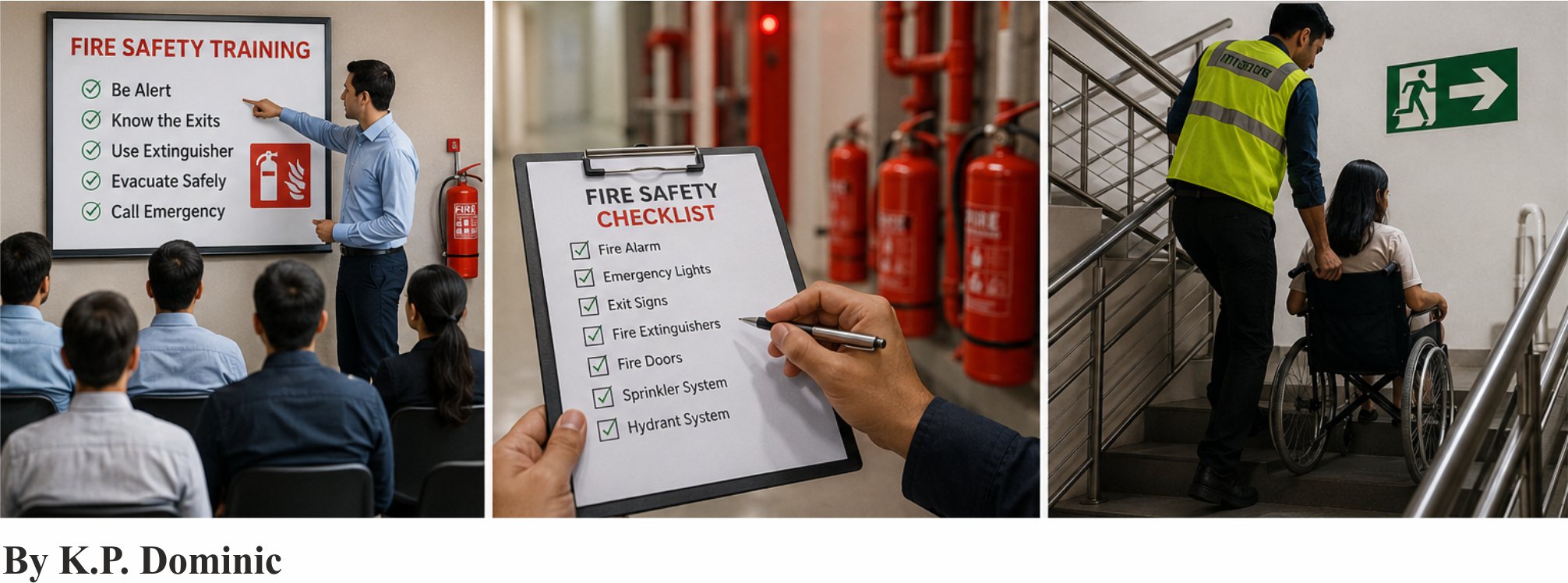
 Every fire leaves behind more than charred walls and twisted steel. It leaves unanswered questions, shattered families, broken dreams, and a haunting realization that many of these tragedies could have been prevented.
Over the past few years, India has witnessed an alarming rise in devastating fires—in hospitals, coaching centres, residential towers, hotels, commercial complexes, factories, warehouses, and public buildings. Each incident follows a painfully familiar pattern. Committees are formed. Investigations begin. Reports are published. Accountability is debated. New circulars are issued. For a few weeks, inspections intensify, emergency exits are checked, and fire extinguishers receive overdue attention. Then, slowly but inevitably, complacency returns… until the next tragedy strikes.
The uncomfortable truth is that fires rarely kill buildings-they expose our negligence.
A modern building equipped with sophisticated fire protection systems can become a death trap within minutes when preparedness is absent. Conversely, a modest building with a vigilant management team, trained occupants, and disciplined maintenance practices often withstands emergencies far more effectively.
This distinction is what separates compliance from commitment.
WHEN BUILDINGS BECOME DEATH TRAPS
- A building does not become dangerous on the day a fire breaks out.
- It becomes dangerous over months and years of ignored warning signs.
- Emergency exits converted into storage rooms.
- Fire doors permanently wedged open.
- Smoke detectors disconnected because of nuisance alarms.
- Hydrant systems without water.
- Sprinkler valves left closed after maintenance.
- Diesel pumps that fail to start.
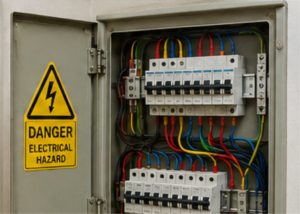
- Electrical panels overloaded beyond design capacity.
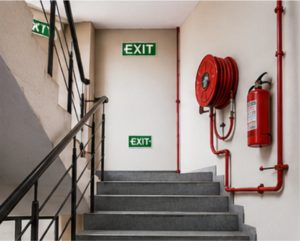
- Escape staircases blocked by furniture or discarded materials.
- Maintenance records signed without actual inspection.
- Training programmes conducted only on paper.
- These are not isolated failures.
They represent a dangerous culture where safety is viewed as an expense rather than an investment, where compliance certificates replace genuine preparedness, and where documentation often receives greater attention than human lives.
Fire does not negotiate with negligence. It exposes it.
THE GREATEST FIRE PROTECTION SYSTEM IS STILL THE HUMAN MIND
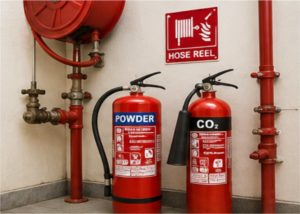
- Technology has transformed fire protection.
- Intelligent detection systems.
- AI-enabled surveillance.
- Addressable fire alarm networks.
- Automatic sprinklers.
- High-pressure water mist.
- Clean-agent suppression systems.
- Smart building management platforms.
- Yet history repeatedly teaches us one simple lesson.
- Technology can only perform as effectively as the people responsible for maintaining it.
- An alarm system cannot compensate for blocked exits.
- A sprinkler cannot replace emergency planning.
- An evacuation map cannot help people who have never participated in a fire drill.
- No machine can substitute for awareness, discipline, and leadership.
- The first line of defence has never been equipment.
- It has always been people.
SELF-AUDITS: THE MOST POWERFUL INSPECTION NO ONE TALKS ABOUT
- Government inspections are important.
- Third-party audits are valuable.
- Certification bodies perform an essential role.
- But none of these can replace the culture of continuous self-examination.
Every building owner, facility manager, Resident Welfare Association (RWA), industrial safety officer, school administrator, hospital director, hotel operator, shopping mall manager, and institutional head should ask a simple question every month.
“If a fire starts today, are we truly prepared?”
- Not legally prepared.
- Not documented.
- Not certified.
- Prepared
- A meaningful self-audit is not about completing a checklist.
- It is about challenging assumptions.
- Can every emergency exit be opened immediately?
- Will emergency lighting function during a power failure?
- Are evacuation routes free from obstruction?
- Do security guards know their responsibilities?
- Can every employee locate the nearest extinguisher?
- Will the fire pumps actually start?
- Has every new occupant received emergency orientation?
- Can emergency responders access the premises without delay?
These questions save lives.
SAFETY IS EVERYONE’S RESPONSIBILITY
- Too often, organizations assume fire safety belongs exclusively to the Fire Officer.
- It does not.
- Architects influence safety before construction begins.
- Builders determine structural resilience.
- Developers choose the quality of fire protection infrastructure.
- Consultants design systems.
- Contractors install them.
- Facility managers maintain them.
- Security personnel monitor them.
- Employees operate within them.
- Occupants depend upon them.
- Authorities regulate them.
- Emergency responders defend them.
- Every stakeholder represents one link in the safety chain.
- When even one link weakens, the entire chain becomes vulnerable.
- Safety cannot be outsourced.
- Responsibility cannot be delegated.
- It must be shared.
THE MOST VULNERABLE MUST NEVER BE THE MOST FORGOTTEN
- Every evacuation plan looks perfect on paper.
- Reality is different.
- An elderly resident cannot descend twenty floors within minutes.
- A wheelchair user cannot navigate staircases without assistance.
- A visually impaired individual depends upon guidance.
- A hearing-impaired person may never hear the alarm.
- Children panic differently.
- Patients cannot evacuate independently.
- Pregnant women require additional assistance.
- Every emergency plan that assumes everyone moves at the same speed is fundamentally flawed.
- Inclusive fire safety is no longer optional.
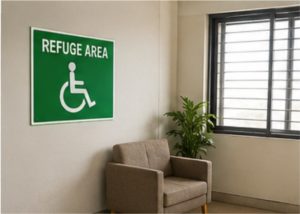
- Every building should identify vulnerable occupants in advance, establish evacuation buddies, install refuge areas where applicable, provide accessible communication systems, conduct inclusive drills, and ensure that emergency responders receive accurate information before entering the building.
- The measure of preparedness is not how quickly the strongest escape.
- It is how safely the weakest survive.
FROM REGULATIONS TO RESPONSIBILITY
- India has developed comprehensive fire safety regulations.
- National Building Code provisions.
- Bureau of Indian Standards.
- State Fire Service regulations.
- Industrial safety frameworks.
- Occupational safety legislation.
- The challenge today is not the absence of rules.
- It is the absence of ownership.
- Real safety begins when organizations stop asking:
- “What is the minimum required?
- “and begin asking:
- “What more can we do?”
- Compliance satisfies regulators.
- Responsibility protects lives.
- One avoids penalties.
- The other prevents funerals.
BUILDING A CULTURE, NOT JUST BUILDINGS
- The safest organizations are rarely those with the most expensive systems.
- They are the ones where safety becomes part of everyday behaviour.
- Where management leads by example.
- Where drills are taken seriously.
- Where maintenance is proactive.
- Where unsafe conditions are reported without fear.
- Where every worker feels personally responsible.
- Where learning never stops.
- Culture cannot be purchased.
- It must be cultivated.
A COLLECTIVE COMMITMENT TO THE FUTURE
- India is witnessing unprecedented urban growth.
- Smarter cities.
- Taller buildings.
- Larger industrial parks.
- Advanced transportation hubs.
- Massive logistics centres.
- Digital infrastructure.
- As our skylines grow higher, our responsibility must grow deeper.
- Fire safety must become an integral part of planning, design, construction, maintenance, governance, and daily living.
- Because the safest building is not necessarily the newest one.
- It is the one where every individual understands that protecting life is a shared responsibility.
- The ultimate objective of fire safety is not to pass inspections.
- It is to ensure that every family returns home together.
- Every worker completes the shift safely.
- Every child comes back from school.
- Every patient leaves the hospital alive.
- Every firefighter returns to his own loved ones after protecting someone else’s.That is the true measure of success.
- Because buildings are built with concrete.
- But safe buildings are built with leadership, vigilance, compassion, and collective responsibility.
- Let us not wait for another headline to remind us what we already know.
- Let us build a culture where prevention becomes instinct, preparedness becomes habit, and safety becomes our shared legacy.
- Only then will our buildings cease to be structures of concrete—and become sanctuaries of life.