
























































The 16 Standard Sections / GHS format. Every Safety Professional Must Know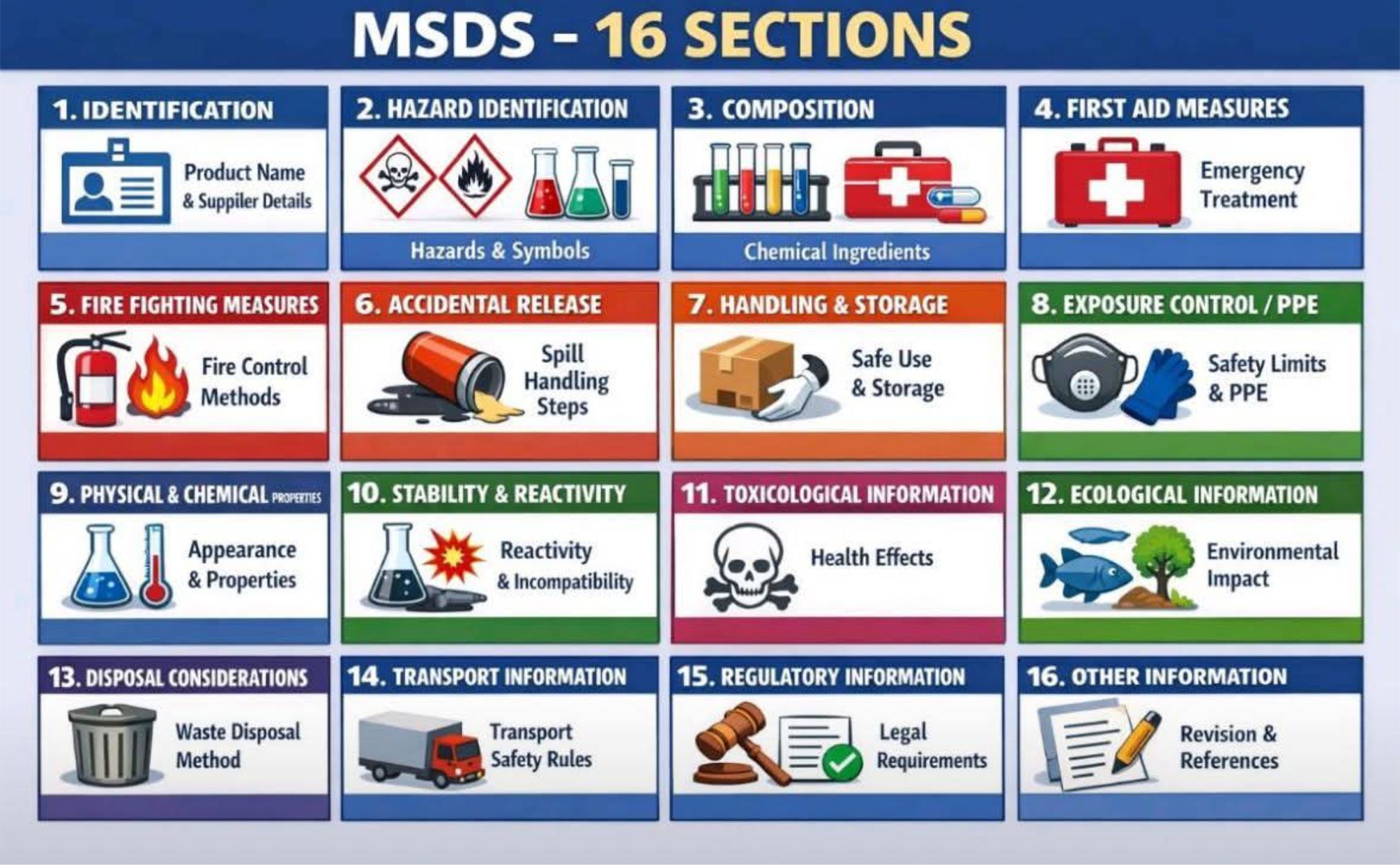
An MSDS (now commonly called SDS – Safety Data Sheet) is not just a regulatory requirement — it is a critical life-saving document. It provides essential information to protect workers, emergency responders, equipment, and the environment from chemical hazards.
- Identification
- Product name & recommended use
- Manufacturer / supplier details
- Address, contact numbers, emergency phone
- Ensures correct chemical identification and emergency communication.
Hazard Identification
- GHS classification & pictograms
- Signal word (Danger / Warning)
- Hazard & precautionary statements
- Clearly explains the nature and severity of the hazard.
Composition / Ingredients
- Chemical names & CAS numbers
- Concentration percentages
- Impurities & stabilizers
- Essential for exposure assessment and medical response.
First-Aid Measures
- Inhalation | Skin | Eyes | Ingestion
- Symptoms & medical attention required
- Guides immediate life-saving actions during exposure.
Fire-Fighting Measures
- Suitable / unsuitable extinguishing media
- Fire & explosion hazards
- Firefighter PPE
- Prevents escalation during chemical fires.
Accidental Release Measures
- Personal precautions & PPE
- Environmental protection
- Spill containment & cleanup
- Controls spills safely and responsibly.
Handling & Storage
- Safe handling practices
- Storage conditions & ventilation
- Incompatible materials
- Prevents leaks, reactions, and degradation.
Exposure Controls / PPE
- Exposure limits
- Engineering controls
- Gloves | Goggles | Respirators |Clothing
- Protects workers from harmful exposure.
Physical & Chemical Properties
- Appearance, odor, pH
- Flash point, boiling/melting point
- Solubility & density
- Helps understand chemical behavior and risks.
Stability & Reactivity
- Stability & hazardous reactions
- Conditions to avoid
- Incompatible materials
- Prevents unexpected incidents.
Toxicological Information
- Exposure routes
- Acute & chronic health effects
- Carcinogenic & reproductive risks
Ecological Information
- Aquatic toxicity
- Environmental persistence & mobility
Disposal Considerations
- Safe disposal methods
- Packaging disposal
- Regulatory compliance
Transport Information
- UN number & shipping name
- Hazard class & precautions
Regulatory Information
- Applicable local & international regulations
Other Information
- Revision date & version
- References & disclaimer
Key Safety Message
An MSDS is not paperwork — it’s a decision-making safety tool. Understanding it can prevent injuries, fires, environmental damage, and fatalities.
Ensure MSDS are available, accessible, and explained to all workers handling chemicals.

Dr. Neeraj Sharma
Sr HSE Professional