























































- Enhanced Situational Awareness
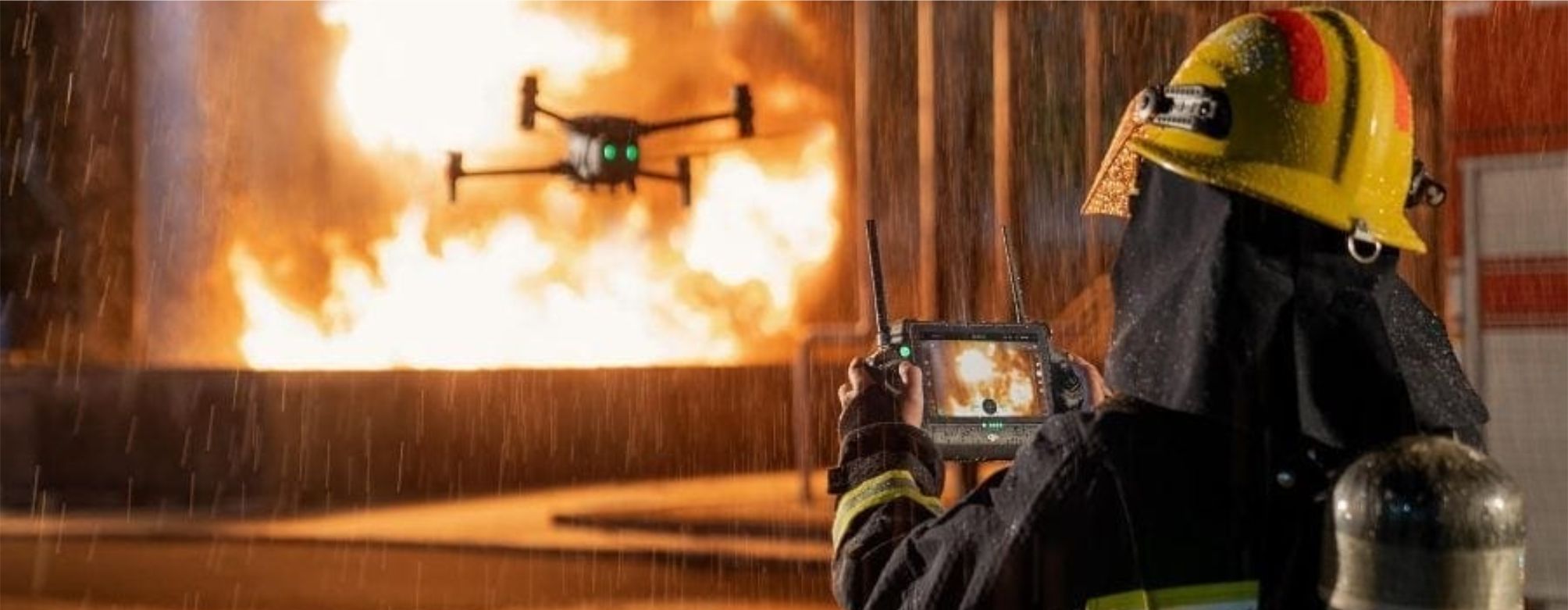
Drones provide real-time aerial views of fire scenes, allowing command teams to quickly assess the scale and spread of fires, identify hot spots, and allocate resources more effectively. This ability to view incidents from above, especially in large or complex structures, gives critical insights that ground personnel might not easily access. By capturing this vantage point, drones empower fire departments to make faster, more informed decisions, enhancing response accuracy and potentially saving lives.
- Improved Safety for Firefighters
Deploying drones reduces the need for firefighters to enter hazardous or hard-to-access areas. In scenarios like wildfires, high-rise fires, or chemical incidents, drones can collect valuable data on environmental conditions, structural stability, and fire behavior without putting personnel at risk. They can also monitor potential structural collapses and identify danger zones, which provides safer operating conditions and helps prevent firefighter injuries.
- Precision in Search and Rescue Operations
Equipped with thermal imaging and high-definition cameras, drones can locate missing persons or trapped individuals in dense smoke, darkness, or challenging terrain. This capability is particularly crucial in urban fires, natural disasters, and wooded areas, where visibility may be limited. Drones can expedite rescue missions, pinpoint victims quickly, and guide firefighters directly to their locations, which saves precious time during life-threatening situations.
- Efficient Post-Fire Analysis and Documentation
After an incident, drones enable fire departments to document the scene accurately for investigations and insurance assessments. High-quality aerial footage and images help analyze fire patterns, determine points of origin, and assess damage to structures. This data supports post-event reviews, allowing fire departments to refine tactics, train teams on response improvements, and enhance preparedness for similar incidents in the future.
- Cost-Effective Operations and Resource Allocation
While drones represent an initial investment, they offer cost savings over time by streamlining operations, improving resource allocation, and enhancing risk management. Drones can reduce the need for costly manned aerial units, such as helicopters, and allow departments to deploy only the necessary equipment and personnel.
This cost-effective approach maximizes budgets, allowing departments to expand their capabilities without significantly increasing costs, which is especially valuable for departments with limited funding.
Implementing a drone program equips fire departments with advanced tools to improve response times, enhance firefighter safety, and provide comprehensive support across all aspects of fire service operations. With the rapid advancement of drone technology, these benefits are likely to grow, reinforcing the strategic importance of drone programs for fire departments.