

















































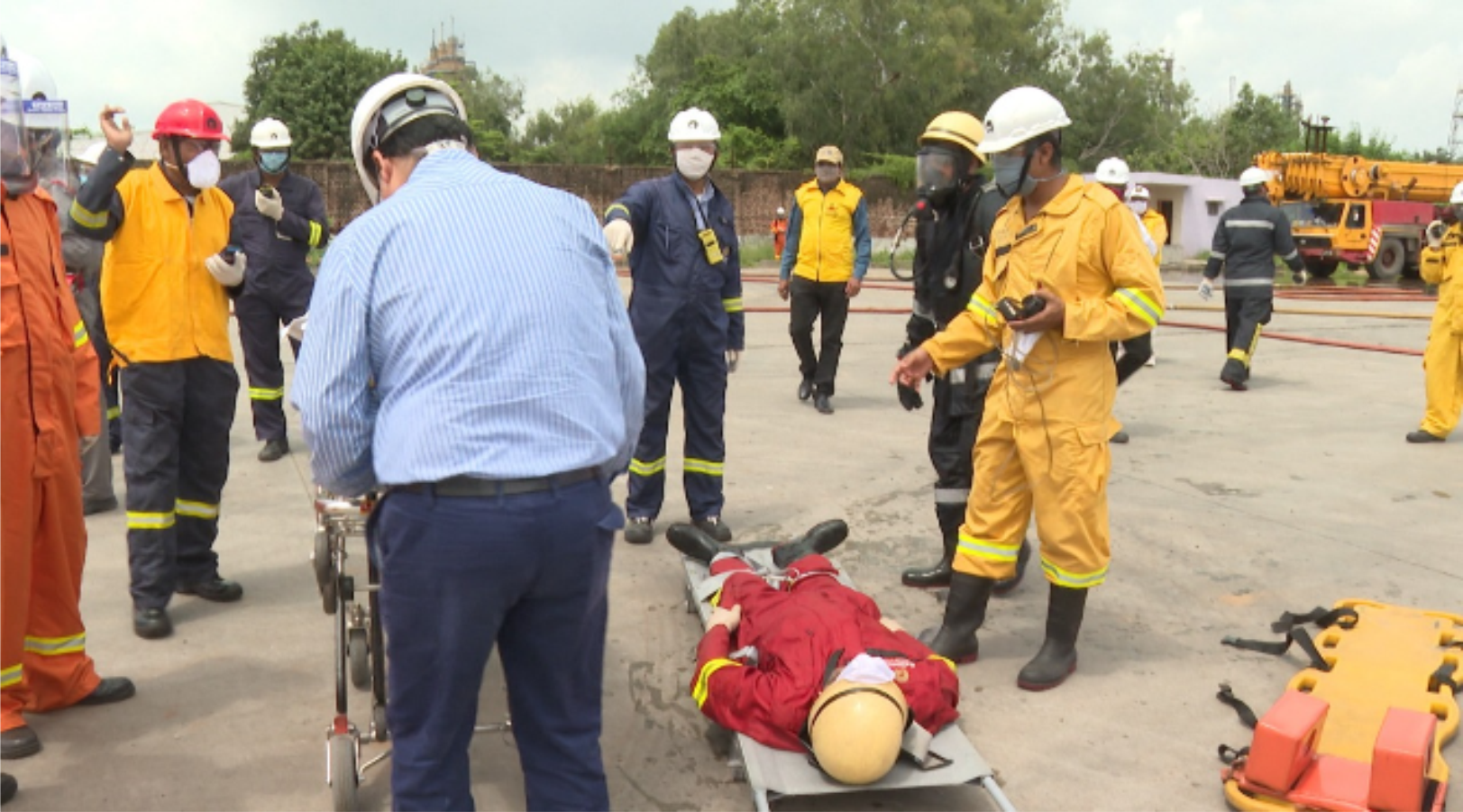
 In contemporary industrial environments-spanning manufacturing clusters, petrochemical complexes, logistics hubs, ports, and Special Economic Zones (SEZs)—the first few minutes of an emergency incident define the trajectory of outcomes. Whether dealing with fires, explosions, toxic releases, confined space emergencies, or medical crises, the effectiveness of the immediate response often determines the scale of loss, business disruption, and recovery timelines. On-Site Emergency Response Teams (ERTs) are therefore not a compliance checkbox but a strategic operational capability designed to bridge the critical gap between incident onset and the arrival of municipal or specialized fire services. When structured, trained, and integrated effectively, ERTs function as force multipliers—stabilizing incidents, safeguarding personnel, and enabling seamless escalation to external responders.
The architecture of an ERT must be rooted in a risk-based framework aligned with the facility’s hazard profile, process complexity, and operational scale. High-risk sectors such as oil and gas, chemicals, heavy manufacturing, and large warehousing require multi-disciplinary ERTs capable of handling diverse scenarios. Structurally, an ERT is typically organized into specialized units, including firefighting teams, rescue squads, medical first responders, hazardous materials (HAZMAT) units, evacuation marshals, and incident command support. Each unit is assigned clearly defined roles and responsibilities, ensuring that response actions are coordinated and efficient. The Incident Command System (ICS) serves as the backbone of this structure, establishing a hierarchical yet flexible framework that enables command clarity, resource allocation, and decision-making under pressure.
Leadership within the ERT is critical to operational success. The Incident Commander (IC), often a senior safety or operations professional, is responsible for overall strategy, coordination with external agencies, and ensuring responder safety. Supporting roles such as Safety Officer, Operations Lead, and Communication Officer provide functional oversight and ensure adherence to protocols. In large facilities, a tiered command structure may be implemented, with zone commanders managing localized operations while reporting to a central command. This layered approach enhances scalability and allows the ERT to manage incidents that span multiple areas or escalate rapidly.
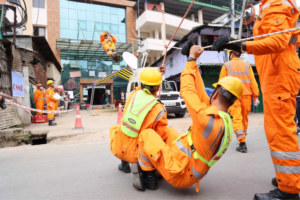 Training is the cornerstone of ERT effectiveness and must go beyond basic firefighting or first aid. A comprehensive training program should be competency-based, scenario-driven, and aligned with international best practices. Core training modules include fire behavior and suppression techniques, search and rescue operations, confined space entry, hazardous material handling, emergency medical response, and incident command. In addition, specialized training is required based on facility-specific risks, such as handling flammable liquids, managing gas leaks, or responding to electrical fires. Simulation-based training, including live fire drills and mock emergency scenarios, is essential to build muscle memory, improve coordination, and test decision-making under realistic conditions.
In high-risk environments, ERT training must also incorporate advanced technologies and tools. The use of thermal imaging cameras, gas detection equipments and portable firefighting systems requires hands-on training to ensure effective deployment during emergencies. Digital training platforms and virtual reality (VR) simulations are increasingly being used to replicate complex scenarios, allowing responders to practice in a safe yet immersive environment. These technologies enable continuous learning and skill enhancement, particularly in facilities where conducting full-scale drills may be operationally challenging.
Integration with municipal fire services and external emergency agencies is a critical dimension of ERT effectiveness. ERTs must not operate in isolation but as an integral part of the broader emergency response ecosystem. This requires the establishment of formal coordination mechanisms, including mutual aid agreements, joint training programs, and communication protocols. Pre-incident planning sessions with local fire departments enable alignment on facility layouts, hazard profiles, access routes, and available resources. Sharing of site maps, hazardous material inventories, and emergency procedures ensures that external responders are well-prepared when they arrive on-site.
Communication interoperability is a key enabler of seamless integration. ERTs and external fire services must be able to communicate effectively using compatible systems and standardized protocols. This includes aligning radio frequencies, adopting common terminology, and establishing clear communication hierarchies. During an incident, the transition of command from the on-site ERT to external fire services must be smooth and well-defined, with the ERT providing critical situational intelligence and support. This handover process is often the most vulnerable phase of response and requires careful planning and regular practice.
Operational readiness of ERTs is dependent not only on training but also on the availability and maintenance of equipment. Firefighting equipment, personal protective equipment (PPE), rescue tools, and medical supplies must be strategically located, regularly inspected, and readily accessible. Facilities must ensure redundancy in critical to avoid single points of failure. In addition, the integration of fixed fire protection systems-such as hydrants, sprinklers, foam systems, and gas suppression systems-with ERT operations enhances overall response capability. ERT members must be familiar with the operation and limitations of these systems to use them effectively during incidents.
Human factors and organizational culture play a significant role in the success of ERTs. Participation in ERTs often involves personnel from various departments who take on additional responsibilities alongside their primary roles. Ensuring motivation, commitment, and accountability requires strong leadership, recognition programs, and a culture that prioritizes safety. Regular engagement, feedback mechanisms, and performance evaluations help maintain high levels of readiness and continuous improvement.
From a governance perspective, the establishment and operation of ERTs must be supported by robust policies, standard operating procedures (SOPs), and compliance frameworks. Regulatory requirements often mandate the presence of on-site emergency teams in high-risk facilities, but leading organizations go beyond compliance to adopt best-in-class practices. This includes conducting periodic audits, benchmarking against industry standards, and integrating ERT performance metrics into overall safety management systems. Documentation of training, drills, and incident responses provides valuable data for analysis and improvement.
The economic rationale for investing in ERTs is compelling. While the costs associated with training, equipment, and coordination may be significant, the potential savings in terms of reduced incident impact, minimized downtime, and protection of assets far outweigh the investment. In sectors where operational continuity is critical, such as manufacturing and logistics, the ability to contain incidents quickly can prevent cascading disruptions across supply chains. Furthermore, effective ERTs contribute to enhanced reputation, regulatory compliance, and stakeholder confidence, which are critical for long-term business sustainability.
Looking ahead, the role of ERTs is expected to evolve with advancements in technology and changes in risk landscapes. The integration of artificial intelligence (AI), Internet of Things (IoT), and data analytics will enable more proactive and predictive emergency management. ERTs will increasingly rely on real-time data, digital twins, and automated systems to enhance situational awareness and decision-making. Wearable technologies and smart PPE may provide additional capabilities, such as health monitoring and location tracking, further improving responder safety and efficiency.