













































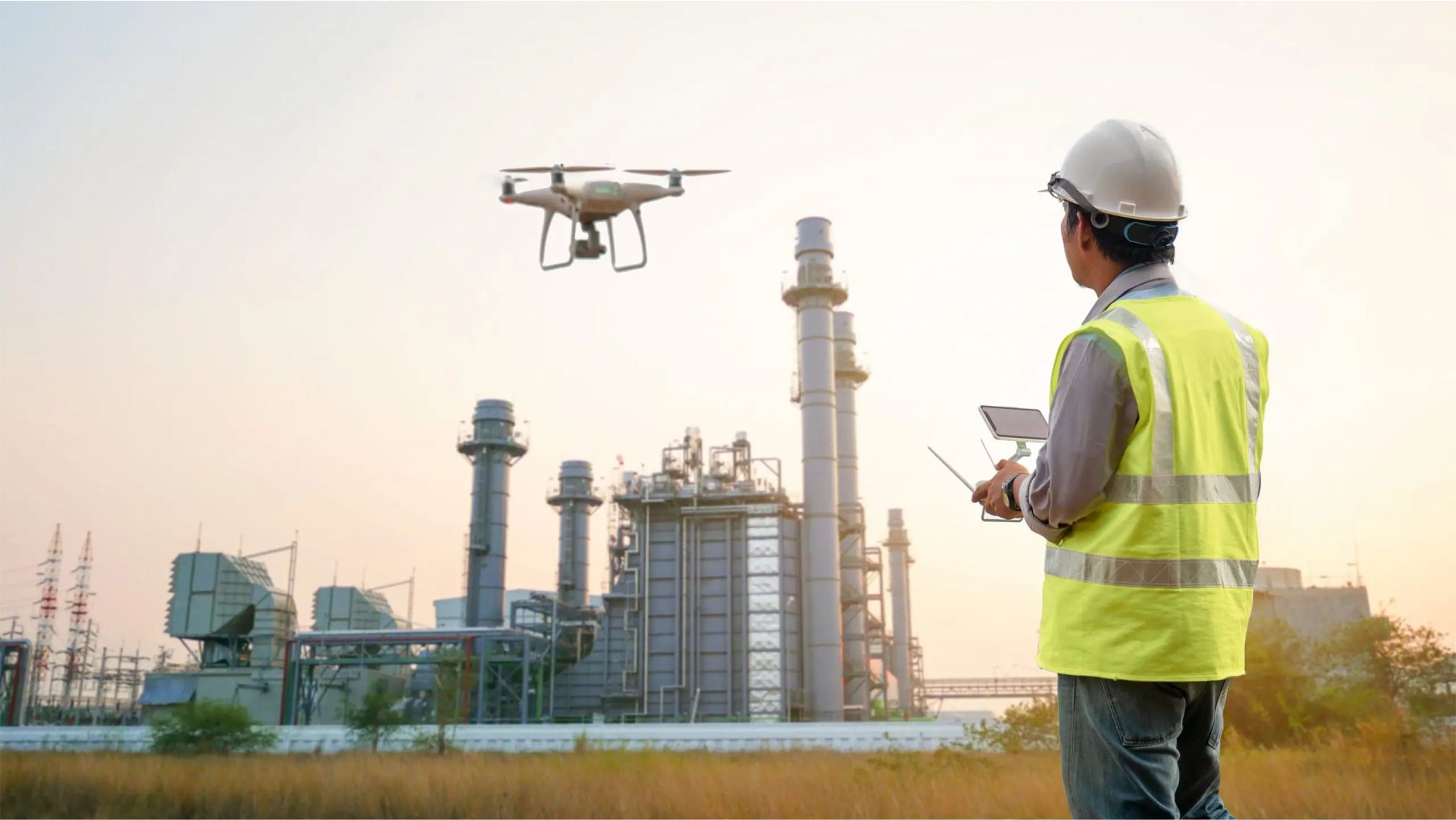
 Oil, gas, and petrochemical facilities represent some of the most complex, high-value, and high-risk industrial environments in the world. Refineries, LNG terminals, offshore platforms, pipeline networks, tank farms, and petrochemical complexes are not only critical to national energy security but also highly sensitive from a safety, environmental, and security standpoint. Any breach—whether physical intrusion, sabotage, theft, or accidental escalation—can have cascading consequences, including production shutdowns, environmental damage, regulatory penalties, and loss of life. In this context, security drones are rapidly emerging as a strategic capability, transforming how these facilities manage perimeter security, situational awareness, and operational resilience.
Traditionally, security in oil and gas facilities has relied on a combination of physical barriers, manned guarding, access control systems, CCTV networks, and ground-based patrols. While these measures remain foundational, they face inherent limitations in scale, coverage, and responsiveness. Energy facilities often span vast geographical areas, including remote deserts, dense forests, coastal zones, offshore installations, and cross-border pipeline corridors. Ground-based surveillance struggles to provide continuous visibility across such terrains, leaving blind spots that can be exploited by intruders, thieves, or hostile actors. Security drones address these challenges by adding mobility, elevation, and intelligence to the security architecture.
One of the primary advantages of drones in oil, gas, and petrochemical security is wide-area perimeter surveillance. Equipped with high-resolution electro-optical cameras and thermal imaging sensors, drones can monitor long perimeters, buffer zones, and exclusion areas in real time. Thermal sensors are particularly valuable in these environments, as they can detect human presence, vehicles, or animals even at night, in low visibility, or through light vegetation. This capability is critical for early detection of unauthorized access near pipelines, tank farms, or critical process units, where even minor intrusions can escalate into major safety incidents.
Rapid threat verification is another area where security drones deliver significant value. Conventional intrusion detection systems often generate alarms without visual confirmation, leading to delayed or inefficient responses. In contrast, drones can be launched immediately upon an alert to provide live aerial feeds to the Security Operations Center (SOC). This enables security teams to assess the nature of the threat—whether it is a genuine intrusion, insider activity, wildlife movement, or a false alarm—and take proportionate action. Faster verification reduces response time, minimizes unnecessary deployment of personnel, and enhances overall decision-making under pressure.
In oil and gas facilities, theft and pilferage remain persistent concerns, particularly for fuel, chemicals, copper cables, and spare parts. These risks are amplified in remote locations and during night operations or shutdown periods. Drones act as both a deterrent and a detection tool. The visible presence of aerial patrols discourages opportunistic crime, while unpredictable flight patterns make it difficult for organized theft networks to study security routines. For pipeline corridors and remote valve stations, drones provide a practical alternative to continuous ground patrols, offering coverage that would otherwise be cost-prohibitive.
Beyond external threats, drones also play a role in mitigating insider risks and operational violations. By monitoring restricted zones, hazardous areas, and high-risk work locations, drones help enforce access control and safety compliance. Unauthorized entry into process areas, unsafe practices near flammable zones, or deviations from approved work permits can be identified early, reducing the likelihood of accidents. This convergence of security and safety monitoring is particularly relevant in petrochemical plants, where process deviations and human error can have severe consequences.
 Incident response and crisis management represent another critical application of security drones in the energy sector. In the event of perimeter breaches, protests, fires, gas leaks, or security incidents, drones provide a real-time aerial overview of the situation. This situational awareness is invaluable for coordinating response teams, managing evacuation routes, and maintaining responder safety. During civil unrest or sabotage attempts, drones allow security leaders to monitor crowd behavior, identify escalation points, and deploy resources strategically—without exposing personnel to unnecessary risk.
Integration with existing security and operational systems is central to maximizing the effectiveness of drone deployments. Modern drone platforms can be integrated with perimeter intrusion detection sensors, radar systems, access control platforms, and command-and-control software. Automated workflows can be established where sensor alerts trigger drone launches, live feeds are streamed to the SOC, and response teams receive actionable intelligence in real time. This integrated approach aligns with the industry’s shift toward centralized security management and intelligence-led operations.
From a business and risk management perspective, security drones contribute directly to operational continuity and regulatory compliance. Energy facilities are subject to stringent safety, environmental, and security regulations. Drone-generated data-such as recorded patrol footage, incident documentation, and inspection logs-supports audits, investigations, and insurance claims. In the aftermath of incidents, aerial recordings provide objective evidence, helping organizations demonstrate due diligence and compliance with regulatory expectations.
Cost optimization is another compelling factor driving drone adoption in oil, gas, and petrochemical security. Expanding manned guarding or fixed surveillance infrastructure across vast assets involves high capital and recurring costs. Drones offer a scalable and flexible alternative, enabling wide-area coverage with relatively lower incremental investment. A small fleet of drones, supported by trained operators and analytics, can significantly augment existing security resources without proportionate increases in manpower.
 However, deploying drones in hazardous industrial environments requires careful governance. Regulatory approvals, airspace restrictions, and coordination with aviation authorities must be addressed. Intrinsic safety considerations are paramount—drones operating near flammable gases or vapors must meet stringent safety standards to prevent ignition risks. Cybersecurity is equally critical, as drone communication links and data streams must be protected against interception or manipulation. Comprehensive training programs for operators, clear standard operating procedures, and robust maintenance regimes are essential to ensure safe and reliable operations.
Looking forward, advancements in autonomous flight, artificial intelligence, and sensor fusion will further enhance the role of drones in energy security. AI-enabled analytics can automatically detect suspicious behavior, perimeter breaches, or abnormal movement patterns, reducing reliance on constant human monitoring. Autonomous patrol drones can conduct scheduled flights along pipelines or facility boundaries, providing persistent surveillance with minimal human intervention. When combined with GIS mapping, digital twins, and predictive analytics, drones will become integral to proactive risk management in oil, gas, and petrochemical facilities.
In conclusion, security drones are no longer experimental tools in the energy sector; they are fast becoming essential components of modern industrial security frameworks. By enhancing visibility, accelerating response, and integrating security with safety and operations, drones significantly strengthen the protection of oil, gas, and petrochemical assets. For organizations operating in high-risk, high-value environments, investing in drone-based security is not just a technological upgrad-it is a strategic decision that supports safety, resilience, and long-term business continuity.