













































 The industrial sector is at a crossroads. As the engine of the global economy, it consumes 37% of global energy while facing tightening carbon regulations worldwide.
Manufacturers must now contend with unstable energy costs, resource scarcity, and the urgent call for climate action. The pressure is no longer just to produce more, but to produce smarter, cleaner, and with true sustainability.
The Hidden Cost of Traditional Operations
For decades, factory operations were highly inefficient, struggling to fix problems only after they occurred. The old “run-it-till-it-breaks” model created “energy black holes” that drained resources and profits, placing a heavy burden on the environment.
Equipment is typically maintained only after failure, causing severe downtime, but the real cost comes earlier. Consider an unmonitored motor running slightly above specification or an oven with undetected heat loss; these act as a constant energy drain and silently increase the carbon footprint.
This reactive approach extends to infrastructure. Vast production floors keep lights and HVAC running around the clock for human workers—often the largest source of “non-production” energy waste.
Older systems lack visibility into these invisible inefficiencies, from air compression leaks, which alone can waste 20-30% of the energy output, to electrical cabinet overheating. Manufacturers remain blind to major cost-saving and sustainable transformation opportunities. In this data vacuum, the balance sheet and biosphere suffer.
The Intelligent Pivot: From Blind Spots to Precision Power
The future of manufacturing relies on intelligent technology to shift away from costly, reactive operations toward high-precision, proactive green practices. This transformation embeds AI and advanced sensing to optimize power use, eliminate waste, and minimize carbon footprints.
Central to this shift is innovative equipment optimization. Low-power robotics, motors, and systems are managed by intelligent algorithms that dynamically adjust operations to match demand with minimal power use. AI-enhanced thermal monitoring provides 24/7 oversight, detecting signatures of inefficiency or failure to enable predictive maintenance and targeted green upgrades.
Equally transformative is smart logistics and the “dark warehouse”. Recognizing that climate-controlled storage drains utilities, facilities now deploy automated guided vehicles and handling platforms that operate perfectly in darkness. This allows massive storage zones to transition to near-zero energy for lighting and climate control, proving productivity and environmental protection can become a unified goal.
Technology in Action: Hikvision’s Green Manufacturing Transformation
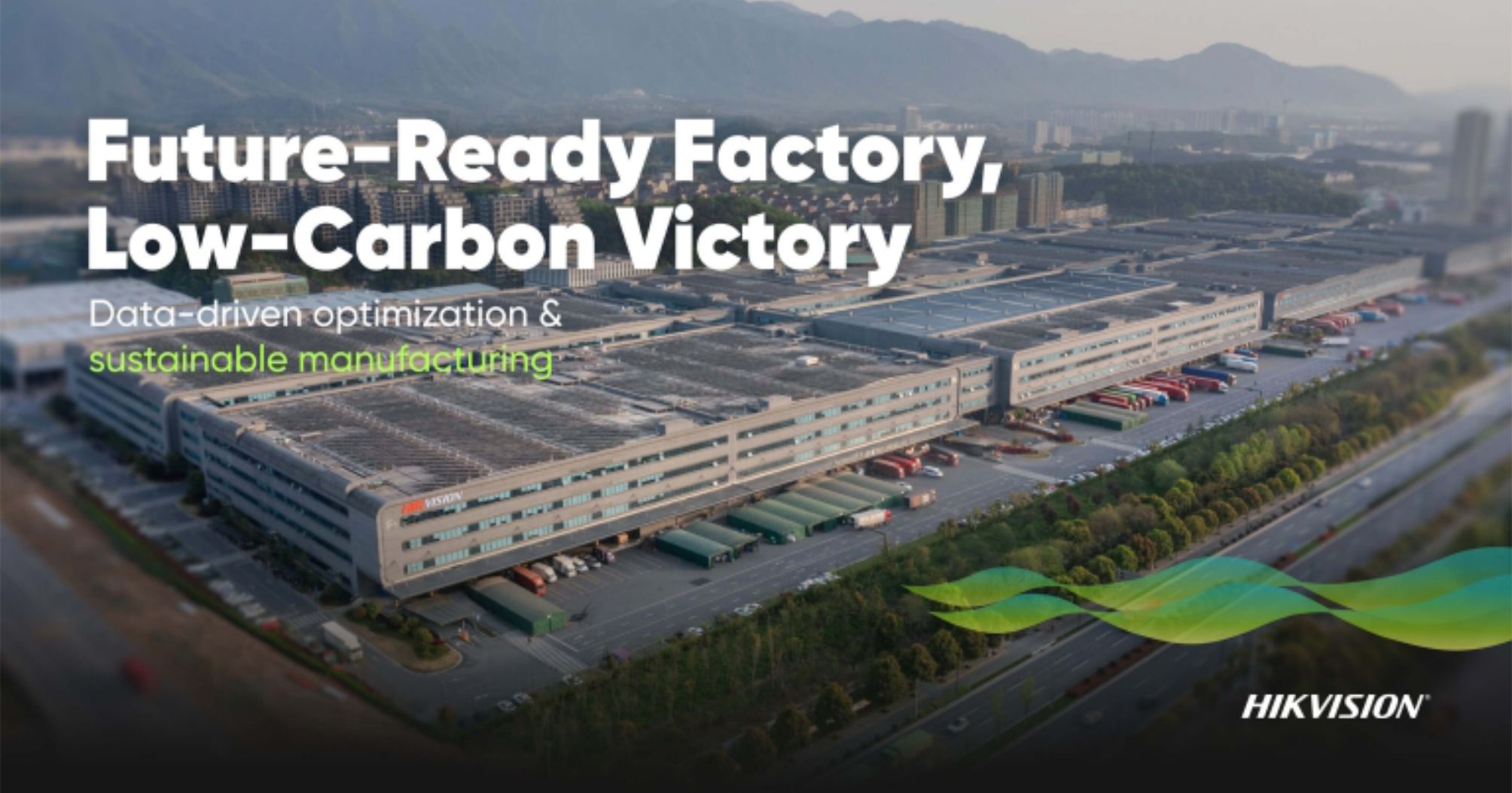
The commitment to smart, sustainable production is not abstract theory—it is integrated into real-world operations. At Hikvision’s manufacturing bases, the company has implemented these AIoT solutions to strengthen its green manufacturing and ESG performance, turning commitments into verifiable, industry-leading practices.
Such a technology-driven initiative has delivered high-impact results:
- Massive Energy Savings in Production: Through intelligent equipment control and optimization, the facility reduced annual electricity consumption by over 1.38 million kWh, showcasing the power of precision technology.
- AI-Driven Waste Reduction: Large-scale AI detects assembly errors and missing components in real-time, catching defects before they move downstream. This minimizes resource-intensive rework and ensures maximum material efficiency.
- Energy-Efficient “Dark Warehousing”: To cut non-production waste, over 80,000 square meters of logistics space now operates as fully automated “dark warehouses.” AGV/CTU systems ensure 100% coverage, proving high efficiency and low energy use are compatible.
- Sustainable Logistics and Packaging: Hikvision deployed 4,469 electric vehicles for low-carbon transport and increased reusable packaging usage from 20% to 30%. These green solutions significantly reduce emissions and resource dependency.
- Proactive Environmental Risk Detection: AI acts as an early-warning sensor, identifying smoke, flames, or leaks faster than traditional systems. This enables immediate response to prevent hazards and ensures long-term operational resilience.
The Green Factory is where business growth meets environmental responsibility. As AI, automation, and thermal solutions become the backbone of sustainable manufacturing, more innovators are moving early to lead the low-carbon shift. Want the practical playbook? Explore our smart manufacturing white paper: how large-scale AI powered video intelligence transforms efficiency and accelerates smart manufacturing.
To see how Hikvision integrates green commitments into operations and broader value chain, please read our ESG Reports.
[1] The International Energy Agency. (2023). IEA – Industry Energy System Overview
[2] Future Market Insights. (2025). Compressed Air Leak Detection Market Report
For more information, please visit us at www.hikvisionindia.com