












































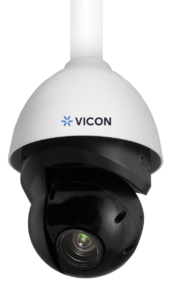
 Auto-tracking has long been one of the most promising features in PTZ surveillance systems. The idea is simple: detect a moving object and automatically follow it without human intervention. In practice, however, traditional auto-tracking has often struggled with reliability—losing targets, reacting late, or behaving unpredictably in complex environments.
As surveillance systems evolve toward autonomy, LiDAR is emerging as a key technology that fundamentally changes how auto-tracking works-making it faster, more stable, and far more dependable.
The Limitations of Vision-Only Auto-Tracking
Conventional PTZ auto-tracking relies primarily on video analytics. The system detects an object in the video frame and instructs the PTZ to follow it based on pixel movement.
This approach works well in controlled conditions but faces challenges in real-world environments:
- Low contrast scenes (night, fog, dust, smoke)
- Objects blending into the background
- Sudden lighting changes
- Fast or erratic movement
- Long-range tracking where depth is unclear
- Occlusion by other objects
In these cases, the camera is effectively trying to understand a three-dimensional world using a two-dimensional image.
 “Surveillance is moving beyond visual monitoring toward spatial underst-anding. Technologies like LiDAR allow cameras to perceive distance, depth, and movement with far greater precision, transforming auto-tracking from a reactive feature into a dependable, autonomous capability. This shift is critical as security systems are expected not only to observe environments, but to understand them.”
-Gaurav Taywade, Managing Director – India, Vicon
What LiDAR Brings to Surveillance
LiDAR (Light Detection and Ranging) adds a missing dimension to surveillance: depth awareness.
Instead of relying on visual contrast alone, LiDAR actively measures distance by emitting laser pulses and calculating how long they take to return after hitting an object. The result is a precise, real-time understanding of:
- Distance
- Depth
- Relative position
- Movement in physical space
This capability allows surveillance systems to understand where an object is, not just how it looks.
How LiDAR Works
At a high level, LiDAR operates through three steps:
- Emission – The LiDAR sensor sends out short, invisible laser pulses.
- Reflection – These pulses reflect off objects in the environment.
- Calculation – The system measures the time taken for the pulse to return and calculates the exact distance.
By repeating this process continuously, the system builds a live depth map of the scene. Unlike video, this depth information is unaffected by color, shadows, or lighting conditions.
Why LiDAR Makes Auto-Tracking Smarter
When LiDAR data is combined with video analytics, PTZ auto-tracking becomes significantly more reliable.
- Stable Target Lock
LiDAR allows the system to maintain lock on a target based on its physical position, not just its appearance. Even if the target partially disappears visually, depth information helps preserve tracking continuity.
- Improved Accuracy at Long Distances
Depth awareness allows the PTZ to calculate precise pan, tilt, and zoom movements, enabling smoother tracking over long ranges without overshoot or jitter.
- Reduced False Tracking
LiDAR helps distinguish real moving objects from shadows, reflections, or background motion—significantly reducing false triggers.
- Better Performance in Low Visibility
Because LiDAR does not rely on ambient light, it performs consistently in:
- Night conditions
- Fog or haze
- Dusty or smoky industrial environments
- Poor contrast scenes
- Faster Response
With accurate spatial data, the PTZ can reposition immediately and precisely, improving response time during intrusion or perimeter events.
From Tracking to Spatial Intelligence
LiDAR does more than improve tracking—it enables spatial intelligence.
By understanding depth and distance, surveillance systems can:
- Track objects in three dimensions
- Predict movement paths
- Improve handover between detection and PTZ tracking
- Support autonomous camera behavior
This transforms PTZ cameras from reactive devices into proactive, spatially aware sensors.
Why This Matters for Modern Surveillance Deployments
Today’s surveillance environments are complex and demanding:
- Large perimeters
- Industrial plants
- Ports and airports
- Rail corridors
- Smart cities
- Remote and low-light locations
In these scenarios, operators cannot manually control PTZ cameras effectively at scale. Reliable auto-tracking becomes essential—not optional.
LiDAR-assisted auto-tracking ensures that surveillance systems:
- Respond consistently
- Reduce operator fatigue
- Maintain situational awareness
- Deliver usable intelligence, not just video
The Future: Autonomous, Multi-Sensor Surveillance
The future of surveillance lies in sensor fusion – combining:
- Visual intelligence
- Thermal detection
- Spatial awareness (LiDAR)
- Edge AI decision-making
Together, these technologies enable surveillance systems that can detect, understand, and respond with minimal human intervention.
LiDAR plays a critical role in this evolution by anchoring intelligence in physical reality, allowing cameras to understand space, movement, and distance with precision.
Conclusion
Auto-tracking has long promised autonomous surveillance, but its effectiveness has been limited by the constraints of vision-only systems. LiDAR changes this equation.
By adding depth, distance, and spatial awareness, LiDAR transforms auto-tracking from a feature into a dependable capability—one that works reliably in real-world conditions.
As surveillance systems move toward autonomy, LiDAR will become a foundational technology, enabling PTZ cameras to track with confidence, accuracy, and intelligence—regardless of environment.