

























































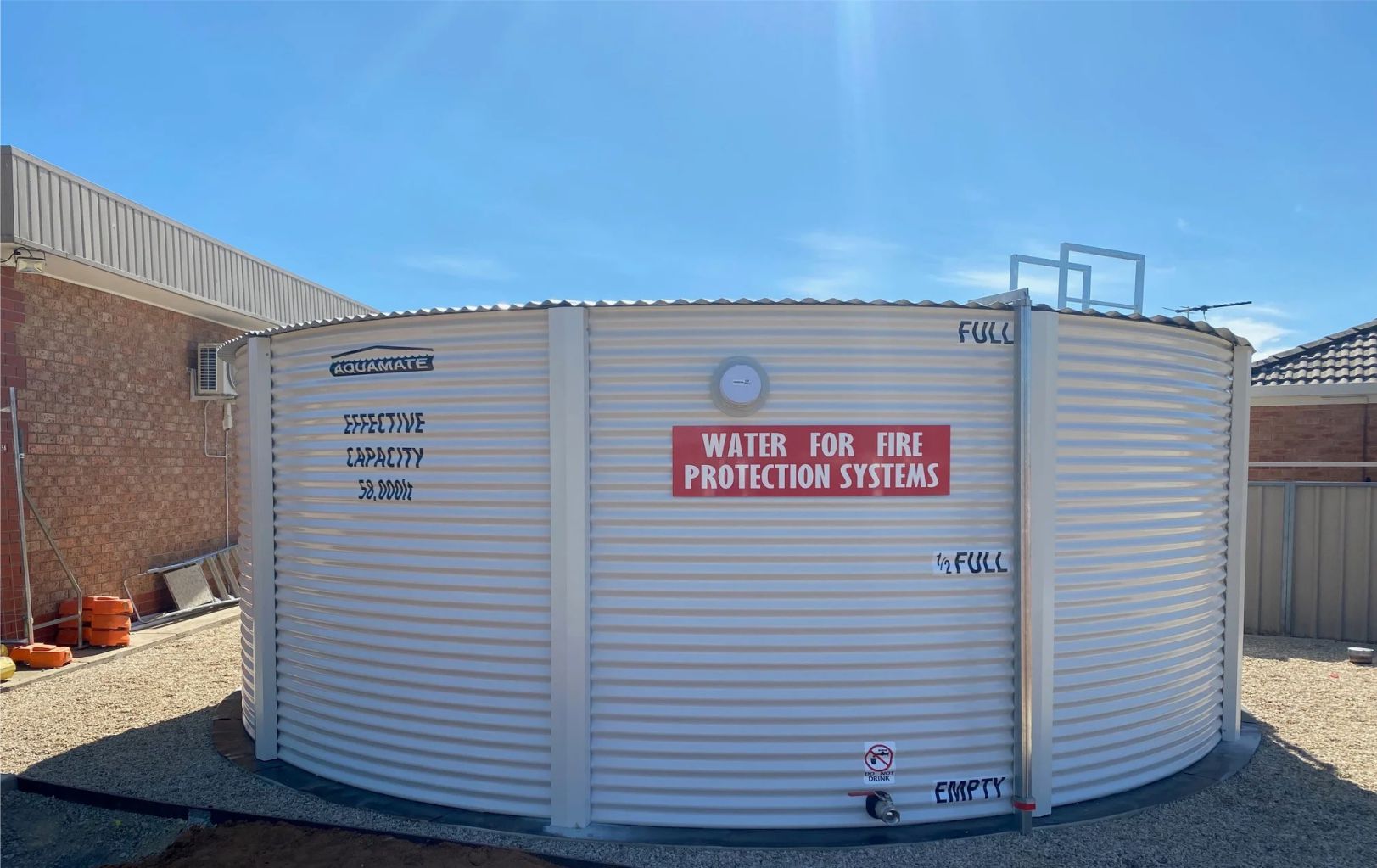
 Water is the lifeblood of any fire protection system. Its availability, volume, and pressure directly determine the efficiency and effectiveness of sprinklers, hydrants, hose reels, and other firefighting equipment during an emergency. While modern fire protection systems integrate sophisticated detection, alarm, and suppression technologies, the fundamental requirement remains unchanged: adequate, reliable, and uninterrupted water supply. Without sufficient water, even the most advanced fire suppression systems are rendered ineffective. Consequently, the design, construction, and maintenance of fire water storage tanks are critical elements in ensuring operational resilience and safety.
 Fire water storage tanks are engineered reservoirs dedicated solely to firefighting purposes. They are designed to provide a continuous water supply under emergency conditions, independent of domestic or industrial water usage. Standards such as NFPA 22 (Standard for Water Tanks for Private Fire Protection) and the National Building Code of India (NBC) prescribe specific requirements for fire water storage, emphasizing capacity, accessibility, redundancy, and operational readiness. According to these standards, water tanks must be sized according to hazard classification, occupancy type, and fire protection system design. For example, medium hazard industrial or commercial buildings may require underground storage tanks ranging from 75,000 liters to 200,000 liters, while high-hazard facilities such as chemical plants or warehouses may necessitate larger capacities to accommodate prolonged firefighting operations.
 Fire water storage systems are generally divided into two main categories: underground tanks and overhead or terrace tanks, each serving distinct operational functions. Underground tanks typically serve as the primary reservoir feeding the fire pump room. Constructed from reinforced cement concrete (RCC) or steel, these tanks are designed for durability, corrosion resistance, and seismic stability. They must provide sufficient water volume to operate fire pumps at the required flow and pressure for the duration of a fire event, as dictated by hazard classification and system design. Underground tanks also offer protection against environmental factors such as temperature fluctuations, sunlight exposure, and physical damage, ensuring the water supply remains uncontaminated and fully available when needed.
Overhead or terrace tanks, on the other hand, provide immediate water supply to sprinklers, wet risers, and hose reels, particularly on upper floors of buildings. By utilizing gravity-fed flow, these tanks ensure that firefighting equipment is functional even before fire pumps are activated, offering a critical response window during the initial stages of a fire. Terrace tanks are typically sized to support the immediate operational demand of the fire protection system, complementing underground storage and maintaining system redundancy. The integration of overhead and underground tanks enhances system resilience, ensures continuous water availability, and complies with NFPA and NBC recommendations for layered safety measures.
Capacity calculation is a critical design consideration for fire water storage tanks. Tank volume is determined based on the hazard classification of the facility—low, ordinary, medium, or high hazard—and the type of fire protection system installed, whether hydrant systems, sprinkler systems, or a combination of both. Sprinkler systems, which deliver a continuous water flow over a large area, often require greater water volumes compared to hydrant systems, which rely on localized application. NFPA 22 provides detailed methodologies for calculating required storage, considering factors such as maximum system demand, duration of operation (typically 30–60 minutes), and peak flow requirements. By applying these guidelines, engineers ensure that tanks provide sufficient supply to handle worst-case fire scenarios while maintaining compliance with international safety standards.
Redundancy and compartmentalization are additional key considerations. Where feasible, fire water storage tanks are divided into separate compartments or multiple tanks to allow continuous availability during maintenance or in the event of contamination. Dual-tank systems enable one tank to remain fully operational while the other undergoes cleaning, inspection, or repairs, ensuring uninterrupted firefighting capability. NFPA 22 also recommends that tanks include water level indicators, drain valves, overflow pipes, and inspection ports to facilitate monitoring, maintenance, and operational reliability. Proper instrumentation allows facility managers and fire safety personnel to verify water availability, detect leaks or contamination, and maintain system readiness at all times.
Maintenance practices for fire water storage are critical to sustaining operational integrity. Tanks must be inspected periodically for structural integrity, water quality, and potential contamination. Sediment accumulation in underground tanks can reduce effective water volume and compromise pump operation; therefore, routine cleaning and flushing protocols are essential. Overhead tanks require inspection for corrosion, structural stability, and obstruction of inlet or outlet piping. All valves, gauges, and monitoring devices should be tested regularly to ensure accurate readings and functionality. Maintenance schedules should align with NFPA and NBC recommendations and be integrated into the facility’s broader fire protection management plan.
Integration of fire water storage tanks with fire pumps and suppression systems is a key operational consideration. Underground tanks feed water to fire pumps, which boost pressure and flow to deliver water throughout the facility’s network of sprinklers, wet risers, and hose reels. The pumps must be designed to operate effectively within the tank’s pressure parameters and flow capacity, taking into account factors such as friction loss, pipe diameter, and pump performance curves. Terrace tanks, by providing gravity-fed supply, supplement the system and enhance redundancy, ensuring that fire suppression systems remain operational even in the early stages of a fire before pumps are fully activated. This layered approach ensures maximum operational reliability and aligns with NFPA 20 (Standard for Installation of Stationary Pumps for Fire Protection) guidance on pump and water source coordination.
The design and construction materials of fire water storage tanks are chosen to optimize durability, safety, and compliance with standards. RCC tanks are widely preferred due to their strength, fire resistance, and longevity. Steel tanks, often lined with corrosion-resistant coatings, are also used where appropriate. All materials must meet seismic, load-bearing, and environmental requirements to ensure structural integrity under normal and emergency conditions. NFPA and NBC guidelines provide specifications for tank thickness, reinforcement, waterproofing, and anchoring, ensuring that tanks remain safe and operational throughout their service life.
Fire water tanks also play a critical role in business continuity and risk management. For industrial facilities, uninterrupted water supply can prevent catastrophic fire damage to critical infrastructure, machinery, and inventory. For commercial and residential complexes, functional fire water tanks safeguard occupants and reduce potential property losses. In high-risk environments such as petrochemical plants, oil and gas terminals, or manufacturing facilities handling hazardous materials, the availability of adequate fire water is essential to meet regulatory compliance and insurance requirements. Non-functional or inadequate water storage can result in operational downtime, regulatory penalties, and significant financial losses in addition to life safety risks.
Training and operational readiness are essential for maximizing the effectiveness of fire water storage systems. Facility staff should be trained in monitoring tank levels, inspecting valves and instrumentation, and coordinating with fire pump operations during emergency response. Emergency drills should simulate various scenarios, including partial tank depletion, pump failure, and simultaneous demand from multiple suppression systems, to ensure that personnel can respond effectively under stress. Documentation of inspections, maintenance activities, and operational tests is critical for compliance and for continuous improvement of fire protection strategy.
In conclusion, fire water storage tanks are a cornerstone of effective fire protection systems. Properly designed, constructed, and maintained tanks provide uninterrupted water supply, ensure operational readiness of pumps and suppression systems, and enhance both life safety and asset protection. NFPA 22 and the National Building Code of India provide comprehensive guidelines on tank sizing, design, instrumentation, redundancy, and operational requirements. By adhering to these standards, integrating underground and overhead tanks, implementing rigorous maintenance programs, and training personnel, facilities can ensure that water—the most critical element in firefighting—is always available when it matters most. A well-engineered fire water storage system embodies reliability, resilience, and readiness, forming the foundation upon which all other fire protection measures depend. Without water, no fire protection system can operate effectively, underscoring the fundamental importance of fire water storage in safeguarding lives, property, and business continuity.