

























































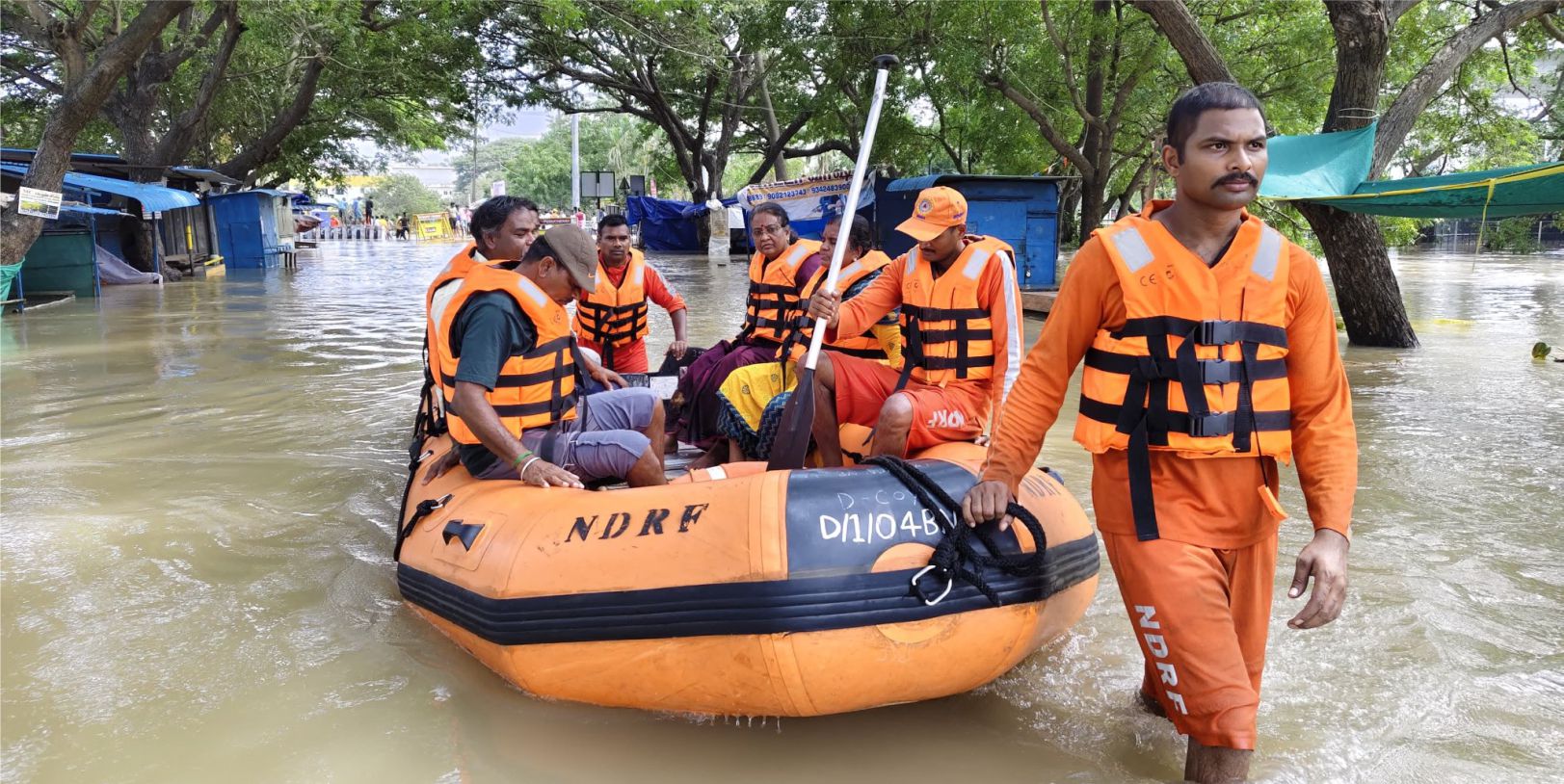
 Urban flooding has emerged as one of the most frequent and disruptive emergency scenarios in India, driven by intense monsoon rainfall, climate variability, rapid urbanization, inadequate drainage infrastructure, and encroachment on natural waterways. Cities such as Mumbai, Chennai, Bengaluru, Hyderabad, Gurugram, and Guwahati now experience recurring flood events that overwhelm municipal systems and place enormous pressure on fire services, disaster response agencies, and civic authorities. Effective flood rescue incident management in this environment hinges on three tightly interconnected operational pillars: the intelligent use of rescue boats, assured access to affected areas, and robust communication under degraded conditions. When these elements are aligned within a structured command framework, rescue outcomes improve dramatically; when they fail, even well-intentioned response efforts struggle to achieve timely results.
Boats are the primary rescue asset during urban flood incidents, yet their effectiveness depends heavily on selection, deployment strategy, and crew competency. Unlike open-water or riverine rescues, urban flooding presents a complex operating environment characterized by submerged roads, concealed obstacles, strong localized currents, and narrow access corridors between buildings. Flat-bottom inflatable rescue boats are commonly preferred due to their shallow draft, maneuverability, and ability to operate over submerged debris. Rigid-hull inflatable boats and aluminum craft may be used in deeper or faster-flowing sections, but require skilled operators and careful route planning. From an incident management perspective, boat allocation must be prioritized based on life risk, accessibility, and population density rather than first-come deployment, ensuring that limited assets deliver maximum rescue impact during the Golden Hour.
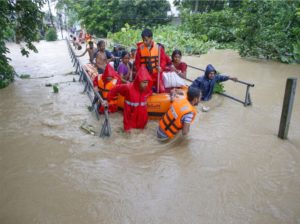 Access management is one of the most underestimated challenges in urban flood rescue. Floodwaters often cut off road networks, submerge entry points, and render conventional response routes unusable. Fire and rescue units frequently encounter difficulty reaching launch points, staging areas, and casualty collection zones. Effective incident command therefore requires pre-identified flood access maps, high-ground staging locations, and alternative ingress routes developed through pre-incident planning. Coordination with municipal authorities, police, and public works departments is essential to clear debris, manage traffic, and secure safe corridors for emergency vehicles. In many Indian cities, the lack of such integrated planning leads to delayed deployment and fragmented rescue efforts, underscoring the need for multi-agency preparedness well before the monsoon season.
Communication during urban flood incidents is particularly vulnerable due to power outages, damaged infrastructure, and network congestion. Mobile phone networks often fail or become unreliable at the very moment when public distress calls peak. For rescue commanders, maintaining communication with boat teams, field units, and control rooms is critical to tracking progress, reallocating resources, and responding to emerging threats. Traditional radio systems remain the backbone of flood rescue communication, but signal degradation caused by waterlogged terrain and dense construction must be anticipated. Backup communication plans, including repeaters, satellite phones, and mobile command vehicles, significantly enhance operational resilience. Clear radio discipline and standardized reporting formats help reduce confusion in an already chaotic environment.
The integration of boats, access, and communication within an Incident Command System is what ultimately determines flood rescue effectiveness. Incident Command must establish clear operational sectors, assign boat teams with defined areas of responsibility, and maintain continuous situational awareness through structured updates. Real-time information on water depth, flow direction, weather forecasts, and dam or lake release schedules informs tactical decisions and crew safety. In urban settings, where flood dynamics can change rapidly due to localized rainfall or infrastructure failure, the ability to adapt plans quickly is a hallmark of effective command leadership.
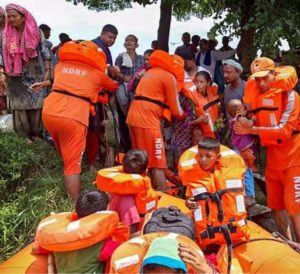 Human factors also play a significant role in flood rescue incident management. Rescuers often operate for extended hours in physically demanding and emotionally charged conditions, navigating submerged hazards while interacting with distressed civilians. Fatigue, stress, and cognitive overload can impair judgment and increase accident risk. Incident managers must therefore plan for crew rotation, welfare support, and safety oversight, even during high-tempo operations. Equally important is managing public behavior; panic-driven crowding around rescue boats or unauthorized civilian boat use can hinder professional operations and create additional hazards. Clear public communication, supported by police and community volunteers, helps maintain order and improves rescue efficiency.
Technology increasingly supports flood rescue operations in urban India. Drones provide aerial reconnaissance to identify stranded populations, assess access routes, and guide boat teams through complex layouts. GIS-based flood mapping and real-time rainfall data support predictive deployment, enabling commanders to position resources ahead of flood escalation. However, technology must be integrated thoughtfully to avoid overwhelming command staff with excessive data. Human-centered design, where digital tools present actionable insights rather than raw information, is essential to support timely decision-making during fast-evolving flood incidents.
Medical and evacuation considerations further complicate flood rescue management. Many rescued individuals suffer from hypothermia, dehydration, injuries, or pre-existing medical conditions exacerbated by prolonged exposure. Incident command must coordinate closely with emergency medical services to establish casualty collection points on safe ground, ensure ambulance access, and prioritize vulnerable populations such as the elderly, children, and persons with disabilities. In prolonged flood scenarios, evacuation planning extends beyond immediate rescue to include shelter management, sanitation, and public health monitoring, requiring coordination across multiple government departments.
From a strategic perspective, repeated urban flooding highlights systemic gaps in infrastructure resilience, land-use planning, and emergency preparedness. Fire and rescue agencies, while primarily response-oriented, possess valuable operational insights that can inform urban planning and flood mitigation strategies. Post-incident reviews and data-driven analysis of access failures, communication breakdowns, and rescue timelines should be institutionalized to drive continuous improvement. Investments in standardized boat fleets, interoperable communication systems, and joint training exercises yield long-term dividends in response capability.
In conclusion, flood rescue incident management in urban India is a multifaceted challenge that demands coordinated control of boats, access routes, and communication systems within a disciplined command framework. Success depends not only on the availability of equipment but on pre-planning, inter-agency coordination, human factors management, and adaptive leadership. As climate-driven flood risks continue to intensify, strengthening these operational pillars is essential for safeguarding lives, protecting responders, and enhancing the overall resilience of India’s urban emergency response ecosystem.