
























































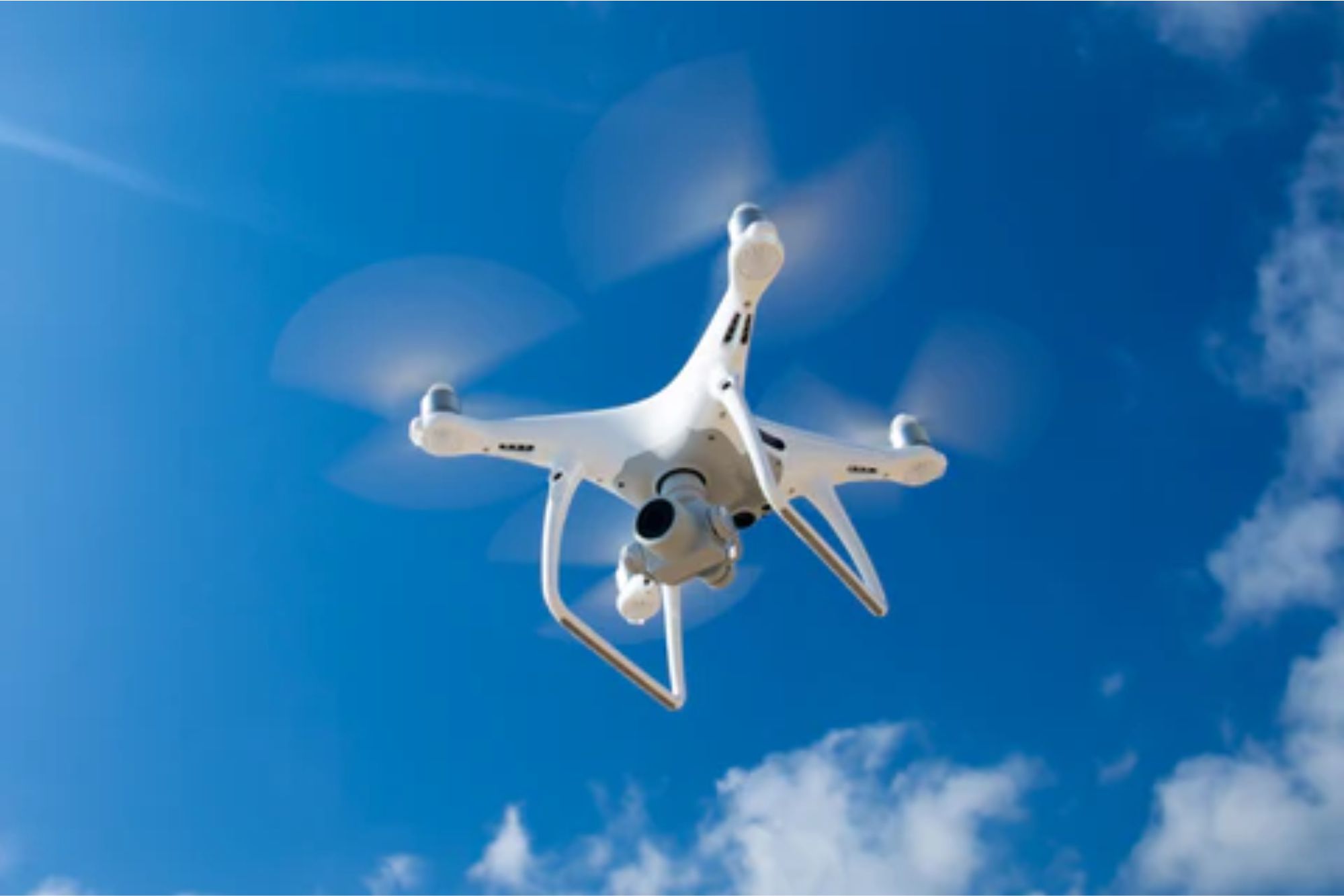
 Drones have not just entered our skies; they have revolutionized the way we interact with the world. These aerial wonders perform tasks ranging from photography to surveillance, scientific research, and even package delivery.
Anatomy of Drones
1.1 Propellers and Motors
Drones, featuring multiple propellers connected to motors, generate lift to stay airborne. Spinning these propellers creates thrust, countering gravity and enabling flight.
1.2 Power Source: The Battery
Rechargeable batteries store electrical energy, powering motors, sensors, and cameras. The choice of battery significantly influences a drone’s flight time and performance.
1.3 The Structural Foundation: Frame and Body
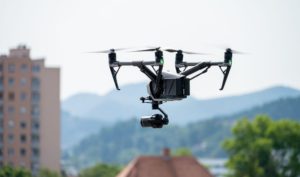 Constructed from lightweight materials like carbon fiber or plastic, the frame provides structural integrity and houses essential components while keeping the drone agile.
The Science of Drone Flight
Drones adhere to fundamental flight principles, requiring an understanding of lift, thrust, gravity, and aerodynamics for sustained flight.
2.1 Lift and Thrust
Propellers generate lift, allowing ascent, while thrust counters gravity. The drone’s ability to generate more lift than its weight is crucial for sustained flight.
2.2 The Role of Gravity
Gravity acts upon the drone, necessitating the generation of sufficient lift to overcome weight, including the frame and additional payload.
2.3 Aerodynamics and Drag
Streamlined shapes and aerodynamic design minimize drag, enabling drones to move efficiently through the air.
Flight Control Systems
Sophisticated flight control systems ensure stability, responsiveness, and safety during drone flight.
3.1 Sensors: Gyroscope and Accelerometer
Embedded gyroscopes maintain orientation, ensuring level flight, while accelerometers detect changes in speed and direction.
3.2 The Brain: Flight Controller
The central processing unit, or flight controller, adjusts motor speeds based on sensor data, ensuring stability and precise response to commands.
Mastering Drone Maneuvers
Drones are highly maneuverable, executing movements like throttle control, pitch, roll, and yaw for various aerial maneuvers.
4.1 Throttle Control
The throttle governs altitude; increasing it raises the drone, while decreasing it lowers the drone.
4.2 Pitch, Roll, and Yaw
These movements, achieved by varying motor speeds, control the drone’s orientation and direction.
Prioritizing Safety
Safety mechanisms, including obstacle detection and fail-safes, are crucial for safe drone operation.
5.1 Obstacle Detection and Avoidance
Advanced drones use sensors to detect obstacles, adjusting flight paths to avoid collisions.
5.2 Fail-Safe Mechanisms
In case of communication loss, drones initiate fail-safe procedures like return-to-home to ensure safety.
Leveraging Drone Cameras
Drones capture stunning visuals from the sky, utilizing camera stabilization and real-time monitoring.
6.1 Camera Stabilization: The Gimbal
Gimbals stabilize cameras, ensuring steady images and videos during flight.
6.2 Real-Time Monitoring: Remote Viewing
Operators monitor live camera feeds, framing shots and capturing visuals effectively.